Showing posts with label John Zorn. Show all posts

Wednesday, February 19, 2025

PainKiller: Samsara

Samsara (the cycle of death and rebirth in our material world in Indian philosophy) is a welcome return to recording by PainKiller, the trio formed in 1991 comprising saxophonist John Zorn, bassist Bill Laswell, and Mick Harris, whose lightning fast drumming is replaced by beats and electronics, and which quickly recorded two albums in 1991-1992, followed by a 1993 live album and 1994's Execution Ground, which reflected a gradual move into more ambient and dub territory.  A second live recording, made in 1994, was issued eight years later, followed by a couple more live recordings with other drummers.

In 2008, Harris joined Zorn and Laswell for a one-off performance in Paris, accompanied by vocalist Mike Patton and Fred Frith, whose Guitar Solos was the last post here.  It seemed like that was going to be the last time we'd hear from PainKiller, until the surprising news that Samsara was to be released last November.

The most striking difference from earlier recordings is Harris' use of electronic percussion, which he has focused on in myriad ways for the last three decades, and, to this listener, it takes the PainKiller sound in an interesting and welcome direction.  Zorn, who played to Harris' recorded material sent to New York City from Birmingham, England, shows all of the incredible technique and power he's had for a half-century, and, as always, is very impressive.

Laswell has had serious health and financial issues and Zorn has worked frequently with his old friend in recent years to help him deal with both and, if for no other reason, this is a fundamental reason for PainKiller to reunite.  Laswell has great difficulty in playing the bass and so relied on some technical assistance while resorting to playing that is far more basic and simple, but still very effective in holding the bottom along with Harris' contributions so that Zorn can explore the dynamic range of his sax.

A new album, The Equinox, is due to be released this month and, apparently, an ambient recording is also in the works sometime this year, so there will likely be more PainKiller posts in the offing relatively soon.

Monday, April 29, 2019

John Zorn/George Lewis/Bill Frisell: News for Lulu

For all his reputation as a musical enfant terrible in the late 1980s, master saxophonist and composer John Zorn could create some pretty accessible and impressive recordings.  His 1988 album News for Lulu with compatriots George Lewis and Bill Frisell and released on the Swiss Hat Hut label is perhaps the best example of this.

Just as importantly, this amazing album is a heartfelt and deeply respectful tribute to some of the most talented, but not as well known jazz composers of so-called post-bop period of the 1950s.  Zorn, a master saxophonist with an impeccable pedigree in jazz (best epitomized by his staggering Masada quartet) built News for Lulu on compositions from Kenny Dorham, Hank Mobley, Sonny Clark and Freddie Redd.

These are not the familiar names of Miles Davis, John Coltrane, Sonny Rollins and other notables, but here Zorn gives them and their work their full due. As Peter Watrous points out in his liner notes essay, the musicians employ "hard bop as a base from which to build their own ideas on improvisation, arrangements, melodies."


Additionally, by eschewing a rhythm section of bass, drums and piano, Zorn and his partners "expose the way the tunes work, making them even more intense, and taking the project out of the constrains of the jazz tradition."  Art Lange, in his remarks, observed that the trio could play these tunes largely as conceived "or break free into contrapuntal abandon, energized every step of the way by bebop's enthusiastic buoyancy and an added jolt of 80s adventurism."

Zorn added his own reflections, emphasizing the telepathic interplay he shared with trombonist Lewis and Frisell, whose wider exposure as a guitarist was yet to come.  He highlighted the former's "beautiful sense of harmony and counterpoint," while the latter "kills you with one of his tasty country funk lines" and his "tonal blend."

As challenging as Zorn's music could be in these early years, News for Lulu is a paramount example of how he could experiment and yet provide a clear listenable experience.

Monday, December 31, 2018

Winged Serpents: Six Encomiums for Cecil Taylor

I was on vacation on the central California coast, blissfully tuned out from the news that, these last couple of years, have been invariably draining and maddening.  So, it was surprising and saddening to find out a while after returning that the peerless Cecil Taylor, one of my favorite musicians of all, died on 5 April, not long after his 89th birthday.


There are dozens of Taylor recordings that could be highlighted here, but the striking tribute album (and these are not always what they're intended to be) quickly assembled, produced, and released by the unfathomably productive John Zorn for his Tzadik label is an outstanding one.  As the OBI strip notes, "Cecil Taylor was a powerful and unforgettable musical force—a fearless visionary and one of the greatest musicians of the past century.  His visceral and intense performances influenced generations of musicians, artists, poets, filmmakers, and creative minds of every description."

The pieces here are definitely influenced by, but not imitative of, this astounding pianist, whose music will always be a regular part of the playlist.  They reflect respect for Taylor while expressing the "heartfelt tributes" Zorn intended for the musicians to develop.  Craig Taborn, Sylvie Courvoisier, Brian Marsella, Kris Davis, Aruán Ortiz and Anthony Coleman all bring remarkable works, beautifully played and recorded with crystalline fidelity, that are really a pleasure to listen to.


A poem, also in a Taylor influenced style, by Charles Bernstein and Zorn's impressionistic album art in ink, gold and, yes, blood are also tributes.  The poem and a portion of the artwork are shown here as indications of how carefully and creatively Zorn and the others expressed their debt to the magic produced by a musician (magus?) rightly described as "this legendary genius who created a new music that transcended all genius."

Sunday, April 8, 2018

Earle Brown: Folio and Four Systems

Considered to be part of the New York School of modern composers, along with John Cage, Morton Feldman and Christian Wolff, Earle Brown developed an "open form" system of composition in the early 1950s that allowed for a measure of authorial intent and choice and improvisation by the performers.

While some early examples of the method were very abstract and left a great deal of room for musicians to interpret what Brown aimed for, later pieces had more concrete notational concepts in them.  In any case, the composer's ideas were a radical departure from conventional composition, even if Cage became even more open in his way of composing and Feldman retained more traditionnal forms of notation.


It's small wonder that John Zorn was greatly inspired by Brown's methods and that this recording is issued under his Tzadik label.  Zorn and the Earle Brown Foundation, celebrating what would have been the composer's 80th birthday in 2006 (he died four years prior), assembled a remarkable group of musicians for Folio and Four Systems.

The first piece, "Folio" was recorded by Brown as he performed trumpet (his main instrument) along with percussion and bass, and another work, "June 1953," was orchestrated by him withh Wolff playing piano as part of a quartet. Others on the album include the amazing vocalist Joan LaBarbara, the remarkable pianist Stephen Drury, noise musician Merzbow (Masami Akita), laptop electronic performer Ikue Mori, violinist Mark Feldman, composer and electronic musician Morton Subotnick (just highlighted on this blog), and the great trumpeter Leo Wadada Smith. 


There is a stunning variety of sounds, textures and colors on this recording that illustrate what Micah Silver, in his contribution to the informative liners, describes as "Brown's attempt to take his music to the brink.  Not to leave it there, but to visit the brink in order that he could explore his way home (wherever that would be) more freely." 

Brown is quoted writing "With FOLIO I intentionally extended the compositional aspect and the performance process as far out of normal realms as I could, just short of producing nothing at all."  The idea was to be produce work between "extremes of finite control" and "extremes of infinite ambiguity."  He also noted that truth is a mobile point on an arc between two ends of a paradox.  Translated into music, that can be very challenging for the listener, but a little patience and an open mind (for open form) can be very rewarding.

Monday, November 27, 2017

Arcana: The Last Wave

Bill Laswell has made it one of his stocks-in-trade to bring together musicians who have not or would not likely be found together in the studio or on stage and give them the leeway to do their thing.  While such experiments may not always be successful, they are almost always interesting.

After the death of the staggering guitarist Sonny Sharrock put an end of the pounding, uber-loud quarter Last Exit, which intermittently performed from 1986 to the early 1990s, Laswell put together the Arcana project, centered around the remarkable drummer Tony Williams and the idiosyncratic guitarist Derek Bailey with Laswell, as always, keeping the bottom line with his bass consistent and accommodating to the other instrumentalists.

In April 1995, Williams, Bailey and Laswell entered the bassist's Greenpoint Studio in Brooklyn and recorded The Last Wave, a churning, boiling, blasting and freely chaotic collection of improvisations that, when it works, is astounding.


This is especially true in the opening "Broken Circle," in which Bailey wails away with his angular approach to the electric guitar, while Williams pounds away with hard washes of cymbals and aggressive snare attacks.  Laswell wisely plays it cool and doesn't try to match the power and propulsion provided by his bandmates.

"Cold Blast" starts out slow and atmospheric, with Williams using his cymbals as a wash of sound, Bailey picks out bits of discordant notes and Laswell lays out undertones of bass.  When Williams starts hitting paired notes and occasional long fills, which is common on this recording, on his snare and Laswell plays with heavy rhythms on his eight-string bass, Bailey is all over the place coaxing strange and wonderful sounds from his axe.  About 4:45 in the piece really comes together with Williams hitting his stride with great fill and cymbal work to correspond with Bailey's always restless explorations and Laswell holds down the bottom end admirably.


The lengthiest track is "Pearls and Transformation" with Bailey's jagged and trebly riffs underlaid by Williams' polyrhytmic approach that is familiar to those who've heard the drummer's music from Miles Davis to Lifetime and elsewhere.  Again, Laswell keeps his bass playing simple and in control to allow the others to riff accordingly.  The piece goes quiet and atmospheric about 2 1/2 minutes in and again at about 6  and then 11 minutes and then goes into some interesting exploratory group improvising that might sound like aimless noodling, but, to this hearer, is a cohesive journey taken by three musicians that do listen to each other even while pushing and prodding to move in several directions during the long piece.

Produced by Laswell with assistance from longtime collaborator John Zorn and his Japanese partner in the Tzadik label, Kazunori Sugiyama and released on the Japanese DIW/Disk Union label, the recording, by Laswell stalwarts Robert Musso as engineer and Layng Martine assisting, is clear and crystalline and makes the most of cleanly distinguishing the instruments.

Sunday, November 26, 2017

Electric Masada: At the Mountains of Madness

After putting on an excellent performance as part of John Zorn's 50th birthday celebration in 2003, and their set released as volume 4 of the many recordings emanating from that lengthy series of concerts at Zorn's Tonic club in New York, Electric Masada embarked on a European tour.

Clearly Zorn was buoyed by the octet's telepathic interplay and collective and individual power when he launched the tour and this 2-disc set capturing performances in Moscow and in Slovenia reveal a band that was louder, more intense and transformative in terms of taking familiar Masada tunes into another sonic realm.


Key to the expansion of volume, power and intensity is the use of two drummers, Masada stalwart Joey Baron, who never fails to impress and amaze, and Kenny Wollesen, another remarkable talent, and the great percussionist Cyro Baptista.  Trevor Dunn is left to anchor the bottom with his stellar bass playing.

Keyboardist Jamie Saft is another integral component to the ensemble, providing both phenomenal soloing and propulsive accompaniment and then is augmented with the electronic touches of Ikue Mori.

When it comes to Marc Ribot, it's hard to not overdo the superlatives.  It isn't just that he is a remarkable soloist in terms of speed, precision and power, but that his creativity on the frets is so marked.  Throughout the recording, his playing is simply amazing.


This, of course, applies to Zorn, who regularly astounds with his alto sax work, but he seems particular energized, motivated, and pushed by his top-notch colleagues throughout these performances.

It is telling that several of the pieces rendered from the Masada book are given extended treatments, with even the shortest tune going 5 and 1/2 minutes.  Six of the fifteen pieces are 15 minutes or longer, giving ample opportunity for everyone to showcase their talents at length during the course of the recording.


Extra kudos have to go out to Heung-Heung Chin, who has created remarkable cover art for Zorn's Tzadik projects over the years, but this one is especially interesting and eye-catching with the individual art works and the font used for the titles.

To this listener, it isn't even about the individual tunes, but about the individual and collective performances that make this such a tremendous album.  At the Mountains of Madness is testament to what makes Masada one of the great jazz ensembles ever and certainly one of the top groups of the last quarter century or so.

Sunday, February 21, 2016

PainKiller: The Prophecy

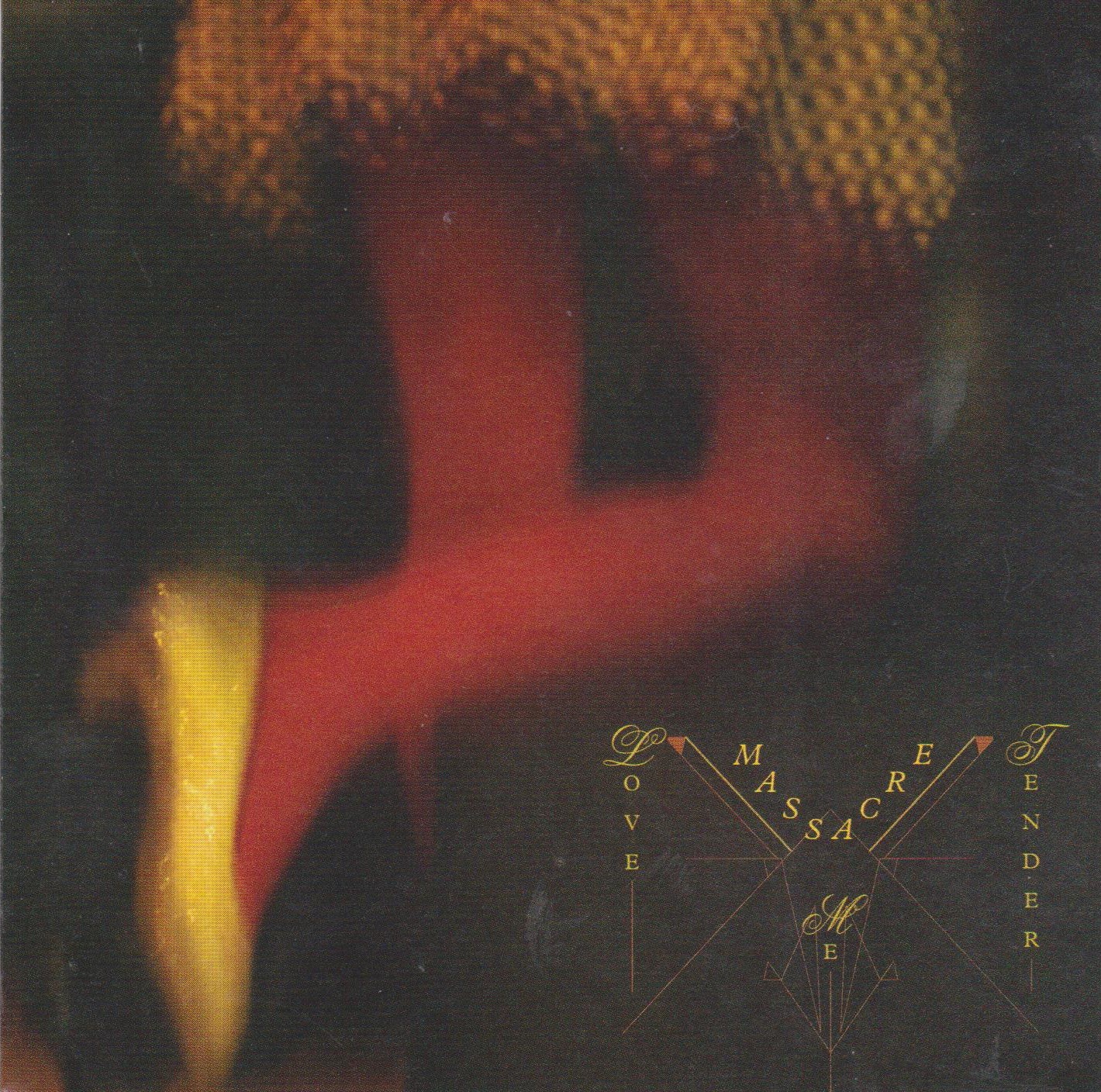
This mindblowing release appears to be something of a cousin to another recent Tzadik (John Zorn's label) release, Massacre's Love Me Tender (2013).

Love Me Tender, featuring Charles Heyward on drums, Bill Laswell on bass and Fred Frith on guitar, was a pastiche of live recordings in Europe edited by Frith and which shows the improvising power trio in a wide variety of aural settings, though dominated by Frith's remarkable fret work.

Similarly, The Prophecy, which came out in 2013, as well, is also a compilation of European live performances by a power trio, with Laswell joined by drummer Yoshida Tatsuya, best known from the Japanese band Ruins, in support of Zorn's wailing, screaming and probing alto sax.  As with Frith on the other recording, Zorn is the primary figure here and for fans, he delivers all of the great playing expected of the master.

But, although he is the front man, as Frith was for Massacre, the value of rhythm section should not be understated.  Laswell is not just a phenomenal bass player who can keep the bottom held down in support of soloists as well as anyone, but he can instantly switch with an array of pedals to a fuzztone, move into heavy and deep dub playing, morph into something like an electric guitarist, and throw in the riff from Black Sabbath's "Iron Man" seamlessly into the mix.


As for Tatusya, he is the third drummer to work with Zorn and Laswell as part of the PainKiller project.  Founding member Mick Harris, formerly of Napalm Death, was the (or one of the) creators of the "blast beat," and his playing was largely limited to the range of percussion he worked with in the grindcore world.  In fact, it has been said his sense of inadequacy when playing with the likes of Zorn and Laswell led him to forego drumming to move into electronics.

The great Hamid Drake, who mainly has played in the jazz realm, turned in an excellent performance in 2003's live recording for Zorn's 50th birthday celebrations.  His training gave a flexibility, variety and fluidity that notably transformed the sound.

With Tatsuya, there is something of a combination.  More or less a rock drummer, but with a wider range than Harris, if not as nimble and elastic as Drake, he turns in a very solid performance and meshes well with Laswell, while providing a solid foundation behind Zorn.  Tatsuya is given several minutes to solo and turns in a fine one.

The brief note on the OBI strip doesn't suggest this, but reviews indicate that The Prophecy might be viewed as a summary statement on the PainKiller project.  It is true that the last gig of the band was in Paris in 2008, when Harris surprisingly turned up to play drums and longtime Zorn collaborator Mike Patton contributed the screaming vocals Harris used to deliver in the early days.

Whether this album is the final word from PainKiller or not, it is another fantastic improvisational journey with Zorn and Laswell, with Tatsuya doing an excellent job.  A word has to be said about the crystalline engineering job by Oz Fritz, who has done a great deal of work with Laswell over the years, and makes the sound as good as can be obtained from a live gig.  Finally, Heung-Heung Chin's gorgeous artwork, a trademark of Zorn's Tazdik label, is worthy of noting, including the use of the photographic subjects of bones, teeth and the like, which are typically PainKiller-like.

Thursday, December 17, 2015

Massacre: Love Me Tender

After the remarkable guitarist Fred Frith left the British group Henry Cow in the late Seventies, he moved to New York and became acquainted with the rhythm section of Material, featuring drummer Fred Maher and bassist Bill Laswell.

Calling themselves Massacre, the trio released a 1981 studio album, Killing Time, and completed a slate of live performances before Maher quit the short-lived group.  Although Frith and Laswell formed another trio with Golden Palominos drummer Anton Fier and performed some Massacre tunes later in the decade, it was not until 1998 that the band was resurrected, this time with British drummer Charles Hayward of This Heat.

Signed to John Zorn's Tzadik label, the group recorded a studio album and two live recordings, one of which, Lonely Heart, was featured here in 2013, before Frith culled the archives of festival performances in Germany and Switzerland in 1999 and a performance in June 2008 in Italy to assemble Love Me Tender, released in 2012.

Because Massacre's music was improvised, it doesn't, to this listener, much matter whether the edited performances come across as "songs," despite the sequencing and titling, the latter drawn from poet Lyn Hjinian's mid-1970s collection Writing is an Aid to Memory.


What makes this album compelling is the wide array of sounds coaxed by Frith from his electric guitar, parallelled in many ways by Laswell's similarly experimental approach to playing the bass.  Hayward plays a bit of melodica and provides some wobbly vocalizations in addition to his steady and reliable drumming, providing a bedrock for his compatriots to build from.

It is difficult generally to point out highlights in terms of the "songs" listed on this recording, but there is one bright exception, which is the staggering "Shadow When Omitted."  Whatever one makes of Hayward's vocals, the performances on this nearly six-minute masterpiece of improvisation by Frith and Laswell are mindblowing.

Laswell spends the first part of the track playing with color and imbre on his playing, using devices common to his work, but as Frith develops a series of virtuoso solos employing his typical wide range of techniques and sounds, Laswell hits a couple of extended sequences of monstrous grooves that are just spectacular.

This, in turn, amplifies Frith's staggering playing, which, as much as he likes to experiment and use different techniques of picking and strumming, including the use of objects, there are solos that show him to be as fast and blistering, or more so, than any more popularly-known "guitar god." Of course, what sets Frith apart is his continuous spirit of experimentation, which is amply demonstrated on the rest of this album.

It is fair to characterize this album as a Frith showcase, though perhaps that has always been the case with Massacre's live and studio work.  This is not meant to downplay the work of Laswell, who is a maestro on an instrument not usually associated as a front-line one, or Hayward, who is an excellent drummer.  But, Frith is the centerpiece of this amazing ensemble and Love Me Tender, more than any of the trio's other releases, confirms this.

And, again, "Shadow When Omitted" is a stunning representation of what this great outfit can do and hopefully with continue to.

Sunday, May 3, 2015

John Zorn: Voices in the Wilderness

Last night was an event a quarter century in the waiting--the opportunity to see John Zorn and Bill Laswell live.  Saturday was a marathon for Zorn, who had a series of performances at the Los Angeles County Museum of Art during the day and then an evening of concerts at U.C.L.A.'s Royce Hall.  The latter featured Zorn compositions performed by Abraxas, Secret Chiefs 3 and Bladerunner.

The first group was led by bassist Shanir Ezra Blumenkranz and included a duo of dueling lead guitarists and a blisteringly fast drummer while Blumenkranz held down the bottom with his bass and the Gnawa instrument, the gimbri, on a couple of pieces.  The band generated huge amounts of fast, loud and virtuosic energy, broken up on occasion by slower, quieter passage, and were well-received.

Secret Chiefs 3 is led by guitarist Trey Spruance, formerly of Mr. Bungle and Faith No More, who led an sextet with a keyboardist, bassist, drummer, second guitarist and violin and, while the volume and speed were usually milder than that of Abraxas, the musicianship was remarkable and there was still plenty of powerful playing.  This group got more of a response, possibly because there were a number of Faith No More and Mr. Bungle fans in the audience.

Then came the headlining Bladerunner, with Zorn on alto, Laswell on bass and former Slayer drummer Dave Lombardo.  Given that Zorn and Laswell's Pain Killer is a well-known project, mainly with ex-Napalm Death drummer Mick Harris, comparisons were obvious for those familiar with that earlier group.  Lombardo, however, is a supremely-talented drummer, who could not only provide sheer energy, volume and force, but has the technical facility and agility to give a more complex percussive backing for both Zorn and Laswell.  The bassist employed several types of playing on his instrument using a bank of effects pedals and his techniques were familiar to those who know his work.  Laswell and Lombardo provided a huge bottom that rattled seats and bodies for Zorn to explore the full tonal range of his instrument.

And that he did!  At 61, Zorn shows no sign of slowing down as a composer and performer.  He wailed, screamed, honked and blew with tremendous power and employed his circular breathing techniques to display his staying power.  There were times, however, when the music slowed down, Lombardo relied on complex cymbal work and Laswell simpler bass lines and Zorn played more melodically and showed fantastic control and coloration.

Maybe there'll be a live recording coming from this "Triple Threat," as it was known, because it would be great to have a document of this stunning concert from three amazing ensembles.


Meantime, over the last few days, while working out in the home gym and doing yardwork, this listener had the pleasure to revisit Zorn's masterpiece, Voices in the Wilderness, a 2003 double-disc release on the composer's non-profit label, Tzadik.  This staggering recording features two-dozen pieces from the Masada songbook and represented the second of five releases commemorating the tenth anniversary of the project which marked Zorn's rediscovery of his Jewish heritage.

Each of the pieces was arranged by friends and musicians of the composer and the stylistic range, instrumentation and approaches in arranging are really something to behold.  Moreover, the performances by the many musicians are just remarkable.

Blumenkranz's group, Pharoah's Daughter, pianist Uri Caine's trio, the trio of Medeski, Martin and Wood, altoist Peter Apfelbaum, pianist Anthony Coleman, tenor player Larry Ochs, keyboardist Wayne Horvitz, clarinetist Chris Speed, vocalist Jewlia Eisenberg, bass clarinetist Marty Ehrlich, guitarist Eyal Maoz (who was fantastic with Abraxas last night), laptop electronics player Ikue Mori, vocalist Mike Patton, percussionist William Winant, guitarist Nels Cline, keyboardist Jamie Saft and drummer Kenny Wollesen are among the dozens of musicians whose work is represented on this standout album.

Zorn had not played in Los Angeles since 1990, the year this blogger got into his music, and Laswell has not often appeared in this area over the years either, so last night was a "bucket list" type of evening, with the added pleasure of hearing the high caliber of performers in Abraxas and Secret Chiefs 3.

Friday, May 16, 2014

Method of Defiance: Inamorata

Bassist and producer Bill Laswell's career has been a long and varied one, but few of his many recordings feature as many intersections of musicians as his Method of Defiance project's 2007 album, Inamorata

This album has a slew of renowned jazz performers from the 1960s onward like tenor saxophonist Pharoah Sanders, keyboardist Herbie Hancock, tenor player and flautist Byard Lancaster, sax player Dave Liebman and guitarist Pete Cosey. 

Younger jazz performers like trumpeters/cornetists Graham Haynes (son of the great drummer Roy Haynes), Toshinori Kondo, and Nils Petter Molvaer,  and keyboardist Craig Taborn are also on board. 

Frequent Laswell collaborators John Zorn, along with his Masada String Trio, guitar wizard Buckethead, former Parliament and Funkadelic keyboardist Bernie Worrell and table player and drummer Karsh Kale. 


Finally, as Method of Defiance, in its early incarnations, was heavily driven by the electronic bass 'n drum sound, a plethora of performers from that genre were matched up with the aforementioned musicians, including Paradox, Black Sun Empire, D Star, SPL, Fanu, Outrage, Corrupt Souls, Amit, Evol [misspelled "Evil" on the sleeve] Intent, Fanu and Submerged, the latter being Laswell's partner on the first M.O.D. album and who released this album on his Ohm Resistance label.

These recordings are uniformly interesting and entertaining and some of the performances are just outstanding, including the impassioned playing of Sanders, Liebman and Zorn (and the Masada String Trio's jittery strings with a mournful and brief interlude in the middle of the piece) on their tracks, "Ta' Wil", "Aibi Virus" and "Pattern Engine."  The cooler sounds of the several trumpeters provide a nice counterbalance, while Hancock, Worrell and Taborn use their keyboards to nice effect in providing another palette of sounds to contrast with the horns.  Notably, Cosey and Buckethead, both incredibly inventive and fast players, are somewhat muted here, using their guitars for color and ambience more than for blazing solos or heavy riffs.

The many electronic performers here work well with the other instruments, providing a diverse array of drum machine patterns, electronic percussion and processed sounds that make this more than a typical drum 'n bass record, introducing diversity in its mixings of "live" instruments in the horns, keyboards and guitars categories.  Karsh Kale's excellent table playing on "Aether" is also a highlight, especially as it dovetails with Molvaer's cool keyboards and Laswell's loping bass.  "Remains," featuring Corrupt Souls has several cool and varied electronic "riffs", a sampled voice intoning something about science and technology, and another solid Laswell groove on bass.  "Black Water" has a solid flow to it and Haynes' ultra-smooth cornet work is countered by Lancaster's hard blowing, while Laswell holds it all together with more great playing.

Holding much of this together is Laswell's bass playing--consistently in touch and integrated with the other sounds and highlighting his talent for holding down the bottom of a piece with little wasted effort and flashes of dub and jazz elements.  His work in bringing in a staggering array of jazz-based talent, mixed with Submerged's recruiting of electronic artists makes Inamorata an entirely successful foray into expanding drum 'n bass out of electronics and into a fruitful collaborative partnership with other instruments.

Method of Defiance:  Inamorata (Ohm Recordings, 2007)

1,  Ta' Wil
2.  Humanoid
3.  Hidden Killer
4.  Amenta
5.  Panepha
6.  Babylon Decoder
7.  Aibi Virus
8.  Anti-Jazz Glitch
9.  Black Water
10.  Pattern Engine
11. Aether
12.  Remains

Monday, July 29, 2013

PainKiller: Execution Ground

John Zorn, Bill Laswell and Mick Harris have all been profiled on this blog before, but their project called PainKiller, which existed primarily from 1991 to 1998 and featured a brief reunion in Paris five years ago, featured a form of musical expression borne largely out of Zorn's late 1980s fascination with "grindcore." 

This genre of metal consisting of extremely fast, intense, short bursts of buzz-saw guitars, guttural grunted and/or high pitched screamed vocalizing, rapid and intense "breakbeat" drumming, and imagery and lyrical content (should one find printed versions, because deciphering the vocals was all but impossible) largely pioneered by Napalm Death, for which Harris was drummer until he left in 1990.  Zorn's grindcore obsession first manifested itself in his Naked City project, launched in 1988, but which included a typical Zornian smorgasbord of sounds from country to cartoon music to lounge jazz to surf music, as well as those blasts of grindcore played by such luminaries as guitarist Bill Frisell, drummer Joey Baron and the mighty Fred Frith on bass (rather than his usual guitar pyrotechnics.)

While Harris spent most of his career forsaking the drum set for projects like the so-called "darkwave" electronic music of Scorn, the glacial and involving ambient sounds of Lull, and a host of other projects including the mind-blowing collaboration of Eyeless in Gaza's Martyn Bates in the phenomenal trilogy of Murder Ballads recordings, he did resume his work with the kit in PainKiller for the golden opportunity of playing with two musical masters in Laswell's stellar bass work and the idiosyncratic alto sax playing of Zorn.

The first two records, Guts of a Virgin and Buried Secrets, both recorded in 1991 and released on the Earache label (Napalm Death's label), were short albums of roughly 25 minutes each featuring generally brief pieces of grindcore-influenced music, albeit with superior musicianship from Laswell and Zorn.  The latter recording actually did feature longer pieces, two of which topped the six-minute mark (which in the early Napalm Death days could  include a half-dozen or more pieces,) but there was only a slight derivation in overall sound.


After a hiatus, however, PainKiller reunited in June 1994 for the third album, the fascinating Execution Ground, which was released initially on the Subharmonic label which released Laswell's frenetic output at the time.  Reflecting Laswell's growing interests in dub, ambient, and world music, this album featured some of the pounding grindcore sound, but more often morphed into strange and compelling excursions into wide-open sonic spaces largely influenced by dub and ambient textures, while the titles reflected the fascination Laswell had with India.  There was an entire disc devoted to ambient reworkings of two of the three tracks on the first CD and reveal a side to the PainKiller project in which ample space proved to be no problem for the trio to revise their sound into something different but highly compelling.

Later in 1994, the trio embarked on a tour of Japan, a place that proved highly receptive to PainKiller's music.  In fact, there were eventually three live recordings generated from Japanese performances over the band's lifespan. 

When, however, Zorn sought to reunite the group for his amazing 50th birthday series of live performances and recordings in 2003, Harris declined to take part, his insecurity in his drumming having grown more prominent over the years.  Hamid Drake, an excellent percussionist, filled in and a great performance was had, though purists might balk at not having Harris present. 

As noted above, a one-time reunion show was played in Paris in 2008 and Harris reluctantly took his place behind the kit.  He seemed, from the videos available on YouTube, to have played well enough, but no recordings have been issued and it appears likely that PainKiller has ceased to exist.

This is certainly difficult music and its intensity, power, disturbing cover art, and more is probably forbidding to most.  But, for those who like adventurous music and can leaven their grindcore with dub and ambient (how many of you are actually out there?), Execution Ground is up your alley and then some.  It is truly a unique and memorable musical excursion, even if it might leave you with disturbed dreams afterward!

The album, with excellent engineering from Oz Fritz on the first disc and Robert Musso, assisted by Layng Martine on the ambient disc, was packaged in 1997 with the first two albums and a live recording in Osaka as the four-disc box set Collected Works and kudos have to be given to Tomoyo T.L. for some of the most evocative and hauntingly beautiful cover art likely to be found anywhere--a trait found with many projects released on Zorn's Tzadik label.

PainKiller:  Execution Ground (Subharmonic, 1994; Tzadik, 1997)

Disc One
1.  Parish of Tama (Ossuary Dub)  16:05
2.  Morning of Balachatudasi  14:45
3.  Pashupatinath  13:47

Disc Two
1.  Pashupatinath (Ambient)  20:00
2.  Parish of Tama (Ambient)  19:19

Sunday, January 27, 2013

John Zorn: Mysterium

While the amazing John Zorn is most known for his notorious noisemaking projects in free jazz and exploratory classical composition, he has some remarkable recordings that are less intense in volume and sound, if not less innovative and experimental in content.

One of these is the brief, but memorable, Mysterium, a 2005 release on Zorn's Tzadik label that finds him creating three varied and highly interesting pieces with a cadre of sixteen excellent musicians that tap into various magical expressions of the feminine.

The first piece, "Orphée," finds a stunning combination of brilliantly-played flute by Tara O'Connor underscored by David Shively's well-placed percussion, Stephen Gosling's ephmeral celese and keyboard, Lois Martin's sturdy viola, and the background atmospherics of June Han's harp and Ikue Mori's electronics coming together to take the listener on a nine-minute musical excursion to the mythic underworld of the Orpheus legend, steeped deeply in the inspiration of, as Zorn's liner notes from the airport in Toulouse waiting for a quick flight to Paris make known, the work of Claude Debussy, but with the modern touches with which Zorn excels.  The composer also provides a typically eclectic list of those French artists whose impressionistic works, not just in music, but in art, film, and literature, animated this fascinating work.


To this listener, untutored in the specifics of classical composition, the minimalist female choral work, "Frammenti del Sappho," is the highlight of the record.  With the work of the Rustavi Choir just recently highlighted in this blog and earlier appreciation given to the work of the polyphonic mastery of female Bulgarian choral music, this piece fits in nicely as a complement and contrast.  Zorn noted the interest he took in the very different translation of Sappho's poems by Anne Carson and this blogger has that volume buried in a box up in the attic, having read it not too long before Zorn created this beautiful piece.  The five singers perform with perfection and Zorn's take on the Renaissance's motet form is traditionally harmonic, as he explains in this liners, yet he adds the twist of creating over two dozen sections named for the letters of the Greek alphabet.  Zorn felt that it is "one of the most breathtakingly beautiful pieces in my catalog" and it is certainly one of the most striking and memorable pieces this blogger has heard from the composer.

Finally, there is a piece in three movements called "Walpurgisnacht," or "Witches' Sabbath" and featuring the string trio of two violins and a cello.  This is a work, influenced by the work of Anton Webern, that is generaly harsher, faster-paced, and heavier in dynamics.  The composer had intended to create only two movements, after abandoning an earlier attempt at a first one, but then went back and completed the third, which is a very soft, slow and disquieting conclusion to a striking piece.  Overall the work's mannerisms, with plucking, intense bowing and a complex sense of interplay between the trio of instruments conjures up a sense of the wild ways of witchcraft, which with the occult and mysticism, have been a continuing fascination for Zorn.

It is always a great pleasure to listen to the myriad ways in which John Zorn creates his own universe of diverse sounds and in the multivaried formats in which he presents them.  Mysterium is a record in the "John Zorn Composer Series," which finds him at both his most accsssible ("Frammenti del Sapho") and dense and challenging ("Walpurgisnacht") and, additionally has a crisp, clear and rich sound.  It is an experience that definitely rewards close attention.

John Zorn:  Mysterium (Tzadik, 2005)

1.  Orphée  9:07
2.  Frammenti del Sappho  13:28
3.  Walpurgisnacht  9:58

Friday, October 5, 2012

Naked City: Torture Garden

When, in 1990, the effort by YHB to explore a wide variety of music (or, at least organized, sound) was launched, one of the earliest explorations into some of the more extreme forms of music/sound came with the Torture Garden album by Naked City.  And, at the time, it didn't get too much more extreme than this, though newer forms of music/sound make this stuff seem pretty quaint nowadays!

This project was spearheaded by the fantastically iconoclastic and polymusical (is that an actual word?) figures in modern music, alto saxophonist John Zorn, who had become infatuated with grindcore and other extreme forms of music/sound as exemplified by such groups as Godflesh and Napalm Death (whose original drummer, Mick Harris, will be featured here later, including in the remarkable trio PainKiller with Zorn and uber-bassist/producer Bill Laswell.)

Whereas many could argue that the musicianship in hardcore/grindcore/whatever-you-want-to-call-it-core may not be technically proficient (as if that matters,) the lineup that Zorn pulled together in Naked City is phenomenal.  Guitarist Bill Frisell, bassist Fred Frith, keyboardist Wayne Horvitz and drummer Joey Baron are all masters of their respective instruments, though never heard in a context like this.  Joining the esteemed ensemble is vocalist Yamatsuka (Yamantaka) Eye of the legendary Japanese punk collective, The Boredoms.


In under 26 minutes, Naked City blasts, rips, tears, wails, careens, caterwauls, screams, and plows through forty-two "hardcore miniatures" that run the gamut of sounds that use or mirror music boxes, cartoon soundtracks, dub, jazz, country (yes, country), metal, and many other types/genres/varieties, often in the same forty-two second or eight-second tune.  Tempos abruptly shift, Eye's screams come and go, the tinkling of the piano's ivories give way to Frisell's wailing guitar, Baron's pounding drums segue into a dub beat, Frith's bass goes from fuzzy to jazzy to something more guttural and menacing, and Horvitz goes from that piano to an organ in seconds.  If anything, the only constants are Eye's "vocal" gesticulations and Zorn's wailing sax (though, on occasion, he peels off a calmer riff or two.)

As to the tunes, there are many notable examples of the Naked City aesthetic to bring up.  "Speedfreaks", in all of 52 seconds, is a cut-up mish-mash of every conceivable style Zorn can cram into it, but it's also fascinating, which can be said for the 48-second "The Prestidigitator" as well.  "NY. Flat Top Box" has a country shuffle feel for much of the piece, before some hardcore blasts interrupt, and then comes a sweet finale back to the earlier feel. "Hammerhead" is a 12-second blast of unalloyed noise.  The last several seconds of "The Blade" is Eye bellowing the most hair-raising scream perhaps on record (and, hence, gives the tune its title?] 

"Igneous Ejaculation" [yes, you have to accept some of these titles as part of the gallows humor that drives much of this music; if not, you're merely disgusted, but, then you'd have to see the cover art, too] is a prime example of Baron's spectacular drumming, which actually is well displayed throughout the album, such as in "Ujaku."  "Fuck the Facts" and "Blooduster" are more powerful bursts of propulsive and unforgiving hardcore. 

"Jazz Snob Eat Shit" along with "Perfume of a Critic's Burning Flesh" and "New Jersey Scum Swamp" [which might have foretold a certain reality show now entering its last season?] give some idea of the "crude humor" that informs much of the record.  "Shangkuan Ling-Feng" starts with a snippet of a martial-arts film before launching into a killer riff, some sax/vocal screaming, a brief organ interlude, and then that riff followed by more sax/vocal bellowing and Eye's guttural grunt to conclude.  Finally, there is the fitting album closer, "Gob of Spit," which is to be taken literally, courtesy of Eye's true-to-life vocalization.

As to some of the more hardcore elements of this record, having heard Hüsker Dü's Zen Arcade six or so years before probably helped calibrate the ears somewhat for Torture Garden, although there is nothing that can really prepare anyone for the experience of hearing this record.  There are other Naked City albums that move into more darkly ambient (Absinthe), slowly grinding (Leng T'che) and schizophrenic (Radio and the first, eponymous album) territory, as well as a pretty impressive live album that skillfully recreates the abrupt stylistic and tempo changes on most of the records.

Torture Garden, though, has a strange, special place all its own.  For all of its musical mayhem, a listener would have to bring a particularly twisted (yet, healthy) sense of humor to the experience.  Otherwise, it might only take a minute, or thirty-eight seconds past that, or forty-five seconds further, to become completely disgusted and turned off by the spectacle.

And, this doesn't even deal with the cover art, consisting of one very colorful cartoonish artwork that is too graphic to even describe adequately in words, and a half-dozen or so photographs of intricate bondage scenes involving Japanese women.  The art work led Zorn's then-label, the respected Nonesuch, to balk at using the images, upon which Zorn left the label for the smaller Shimmy Disc. 

There's a recollection that Asian-American activists raised objections at the appearance of the cover (YHB had an early cassette version of the album), which led to its revamping.  Ironically, the album cover design, illustration, and photographs were done by Japanese and Japan has a particularly notable subculture of hyper-violent cartoon art and sexually-themed photography, such as bondage, that has been going on for years. 

It might be worth noting that this was not that long after the Robert Mapplethorpe exhibit dustup in Cincinnati and Tipper Gore and the PMRC's "crusade" against filth and depravity in the music industry, so the shock value and absurdist humor of some forms of music, including the determinedly downtown version found in Torture Garden, don't translate well to lots and lots of people.  Even if the musicians on this record are all masterful and came up with a record that is fun, fascinating, rocking, trippy, bewildering, and, yeah, kooky.

Then again, that seems to describe much of John Zorn's oeuvre over a long and unpredictable career.  Which is why he's so cool.

Tuesday, July 31, 2012

Masada: Live in Sevilla

John Zorn has often been called an enfant terrible of the New York downtown music scene.  Wildly unpredictable, ambitious, provocative, Zorn has made records that mix cartoon soundtracks, classical, hardcore punk, jazz and other sounds, often within the same 27-second track.  He is truly uncategorizable, which is one of his greatest attributes.

Occasionally, however, he takes on a project that makes him . . . well, nearly accessible.  This might be disappointing to some people who enjoy his more experimental works, but when it came to Masada, the jazz quartet that existed for about fifteen or so years, he and his cohorts created one of great ensembles of that form of music to be found anywhere in recent decades.  In this remarkable quarter, Zorn also gets to show that he is a truly great alto sax player, above and beyond the notoriety he receives for his experimentalism (and upper register pyrotechnics.)


Zorn has always professed openly his admiration for the great Ornette Coleman and especially his amazing quartets of the late 1950s and early 1960s and demonstrated this with his Spy vs. Spy recording of Coleman tunes done in speed-metal-like tempos!  Consequently, the alto sax player formed Masada with that structure, including Dave Douglas on trumpet, Greg Cohen on bass, and drummer Joey Baron.

As with the classic Coleman quartets, the interplay between the frontline alto sax and trumpet get plenty of attention, as it should.  To hear Zorn and Douglas harmonize and then play off each other's inventive and stunning lines is a wonder to behold.  However, ears should also be focused, as with the Coleman rhythm section of bassist Charlie Haden and drummers Ed Blackwell and Billy Higgins, on Masada's remarkable pairing of Cohen and Baron, who keep the propulsion going at the highest levels during the faster tunes, but also show great sensitivity and support on the ballads and slower pieces.

What makes Masada further intriguing is the concept of melding that Coleman-inspired format with the emphasis of Jewish folk melodies but with an emphasis on what Zorn calls "radical Jewish culture" where he explores the traditions of his heritage infused with the modernism that has been his forte.  Because of the stellar improvisational skills of the band, the many live albums can sound as fresh and distinctive as the versions from the studio recordings and, as a truly awesome outfit in concert, Masada is likely at its best on these live recordings.

Probably, Live in Sevilla, recorded in that venerable Spanish city in 2000 and released on Zorn's label Tzadik with typically beautiful packaging, is the most impressive from the standpoint of sound quality.  The clarity, crispness and separation are tremendous and each instrument can be heard with phenomenal richness.  As noted above, the telepathy between the four members is a wonder, especially with Cohen and Baron being as "front line" as a rhythm section can be, and then Zorn and Douglas are a formidable improvisatory duo whose work complements and balances one another.  Indeed, Masada is a truly balanced ensemble, as remarkable for the slower-tempo and balladic pieces as the faster, powerful and propulsive workouts.

It is also intriguing to hear Zorn's Klezmer-inspired melodies as launching pads for these excursions into group interplay and otherwordly soloing.  It is hard to imagine that anything could be done to further expand the Masada sound, and Zorn ended the jazz ensemble's fantastic run a few years back, but there are other ensembles, including Electric Masada, the Masada String Trio and the awesome Bar Kokhba Sextet, that bring the songbook into different formulations and give new dimensions that show that Zorn has created a project that will almost certainly stand as his greatest achievement.

Masada: Live in Sevilla (Tzadik, 2000)

1.  Ne'eman  12:36
2.  Katzatz  4:56
3.  Hadasha  10:53
4.  Beeroth  7:06
5.  Yoreh  9:49
6.  Hazor  6:27
7.  Nashon  10:08
Encores:
8.  Lakom  5:06
9.  Bith Aneth  9:33

Sunday, January 22, 2012

John Zorn: Kristallnacht

Labeling and classifying music and musicians may or may not be useful or fair, but there are certainly instances where it can be pointless.   This is definitely the case with John Zorn, whose long career has been filled with examples of music that defy easy categorization.

In 1990, when exploring various forms of music became a fascination for YHB, Zorn was notorious for the Torture Garden album released under his Naked City project.  That recording will be covered here eventually and it was an interesting and remarkable introduction to this fascinating artist.

Later, came Kristallnacht (Night of Broken Glass), recorded in 1992, and comprising the first release in Zorn's Radical Jewish Culture series.  Though Jewish, he had not explicitly identified personally with his heritage until about the time of this mind-blowing recording.  Kristallnacht is a searing examination into the Nazi-led attack against the Jewish population of several occupied states in 1938 (and in which my future wife's maternal grandparents and other family were entangled in Vienna and from which some escaped and others perished in concentration camps.  I also have Jewish ancestry--my grandmother, though mostly Hawaiian,  had the maiden name Levy, as her paternal grandfather, the only of his family born outside of what is now Poland, left San Francisco for Honolulu in 1880.)


Sounds of broken glass, white noise, heavy percussion and grinding guitar evoke the horrors of Nazi brutality, while clarinet, trumpet and violin reflect the sadness, grief and contemplation of these actions, and there is plenty else on this amazing recording to show the range of emotions that one cannot get from films, books or other artistic expressions.

The opening track, "Shtetl (Ghetto Life)" intersperses Nazi rally speeches to a gorgeous klezmer or Jewish folk melody in a forceful juxtaposition that lays the groundwork for the evocative work to come.  The next piece, "Never Again," uses extreme white noise to capture one emotional and psychological state of mind concerning the topic and Zorn warned that the piece "contains high frequency extremes at the limits of human hearing & beyond, which may cause nausea, headaches & ringing in the ears.  Prolonged or repeated listenings is not advisable as it may result in temporary or permanent ear damage."  This track lasts nearly 12 minutes and is one manifestation of Zorn's approach to music (and sound) that has made him a controversial figure over his career, but its carefully layered montage of broken glass sounds represents the rioting.

Then, comes to eerie windswept ambience of "Gahelet (Embers)" reflecting the quiet, but not the calm, that followed the violence and destruction with barely audible violin, guitar and radio sounds.  Other tracks use some of Zorn's interesting approaches to composition with abrupt changes in styles, tempos and instrumentation, while "Barzel (Iron Fist)" is what it's title implies, a bludgeoning, pummeling piece of guitar, percussion and blaring sirens and noise representing Nazi militarism and terrorism.  The last piece, "Gariin (Nucleus—The New Settlement) is most notable for William Winant's inventive percussion and guitarist Marc Ribot's stunning soloing.  In fact, Zorn's careful composition and production is enhanced by the masterful playing on this record, including the work of Mark Feldman on violing, Anthony Coleman on keyboards, Mark Dresser on base, David Krakauer on clarinet and bass clarinet, and Frank London on trumpet--all Jewish musicians.  The CD booklet has images of a burning synagogue, a glorified statue symbolizing a "Nazi Ideal", a Nazi soldier, and corpses of Jews at Bergen Belsen and excerpts of writings about the rioting and Jewish identity.

Zorn has been quoted as saying that Kristallnacht represented a passionate response to years of denying his Jewish heritage in dealing with the Holocaust.  It is truly a visceral, emotional and thought-provoking recording that leaves a real impact on the listener and it defies any attempts at "File Under . . ."

John Zorn:  Kristallnacht (Tzadik 7301, 1995)

1.  Shtetl (Ghetto Life): 5:51
2.  Never Again: 11:41
3.  Gahelet (Embers): 3:25
4.  Tikkun (Rectification): 3:02
5.  Tzfia (Looking Ahead): 8:46
6.  Barzel (Iron Fist): 2:01
7.  Gariin (Nucleus—The New Settlement):  7:58