Showing posts with label Bill Laswell. Show all posts

Thursday, July 16, 2026

Mike Sopko, Bill Laswell, Tyshawn Sorey: On Common Ground

This 2020 release on Bill Laswell's M.O.D. Reloaded imprint definitely seems like a descendant of the first incarnation of Arcana, the trio that, a quarter century ago, harnessed crackling power and squalling intensity in intriguing ways with guitarist Derek Bailey and drummer Tony Williams.  Here the ever-explorative bassist and producer is joined by the titanic percussionist Tyshawn Sorey and the very creative guitarist Mike Sopko, who made a 2015 album with Laswell and another awesome drummer, Thomas Pridgen.

On the back of the package under the label logo are the words "Iconoclast Music Dialogue" and that certainly holds true with his uncompromising and bracing quintet of pieces, which begin with ambient soundscapes and, mostly, evolve into powerful and bracing explorations of far left-field power trio dynamics.


  Sopko is heavily featured here and his trebly power chords, often angular, knotty and skittish, are highly expressive in terms of his approaches to structure, manipulation of strings and broader effects.  As with all of his group efforts, Laswell largely holds the rhythm in a consistent way that allows for Sopko to employ a full-range of performance techniques, though he gets center stage for much of "Parascience."  The amazing and very versatile Sorey utilizes the full resources of his drum kit, from heavy fills, thundering rolls, complex polyrhythms, crashing and slashing cymbal work good old bashing and thrashing and dub-like textures.

With his "collision music" ethos of bringing together players from diverse backgrounds with little or no advance preparation, Laswell's approach means these pieces aren't so much songs as acoustical canvasses on which these musical masters apply their media, varying one from the other, sometimes with aggression and little structure, but often with precision and careful consideration.  What also stands out is that it can easily be discerned that the trio listens to each other, following where one leads, not playing over each other and almost always working seamlessly toward resolution.  And, when they don't, it doesn't much matter because exploration and improvisation allow for some level of ambiguity and uncertainty.

On Common Ground is another of Laswell's trio projects that can, at times, confound, but also be highly rewarding in hearing these excellent performers work together, seemingly with little or no composing, to push each other toward what are often the outer limits of musical structures.  With Laswell seriously ill and largely unable to perform, one hopes that he'll be able to recover and reward us with more music as exciting and gripping as this outstanding record.

Wednesday, February 19, 2025

PainKiller: Samsara

Samsara (the cycle of death and rebirth in our material world in Indian philosophy) is a welcome return to recording by PainKiller, the trio formed in 1991 comprising saxophonist John Zorn, bassist Bill Laswell, and Mick Harris, whose lightning fast drumming is replaced by beats and electronics, and which quickly recorded two albums in 1991-1992, followed by a 1993 live album and 1994's Execution Ground, which reflected a gradual move into more ambient and dub territory.  A second live recording, made in 1994, was issued eight years later, followed by a couple more live recordings with other drummers.

In 2008, Harris joined Zorn and Laswell for a one-off performance in Paris, accompanied by vocalist Mike Patton and Fred Frith, whose Guitar Solos was the last post here.  It seemed like that was going to be the last time we'd hear from PainKiller, until the surprising news that Samsara was to be released last November.

The most striking difference from earlier recordings is Harris' use of electronic percussion, which he has focused on in myriad ways for the last three decades, and, to this listener, it takes the PainKiller sound in an interesting and welcome direction.  Zorn, who played to Harris' recorded material sent to New York City from Birmingham, England, shows all of the incredible technique and power he's had for a half-century, and, as always, is very impressive.

Laswell has had serious health and financial issues and Zorn has worked frequently with his old friend in recent years to help him deal with both and, if for no other reason, this is a fundamental reason for PainKiller to reunite.  Laswell has great difficulty in playing the bass and so relied on some technical assistance while resorting to playing that is far more basic and simple, but still very effective in holding the bottom along with Harris' contributions so that Zorn can explore the dynamic range of his sax.

A new album, The Equinox, is due to be released this month and, apparently, an ambient recording is also in the works sometime this year, so there will likely be more PainKiller posts in the offing relatively soon.

Sunday, August 28, 2022

Last Exit: Last Exit

The life of a non-commercial musician is nearly always one of struggle and any success, however well-deserved, can obviously be suddenly transitory.  Since 1990, Bill Laswell has been a great inspiration to this blogger because of his unerring commitment to presenting music in ways that challenge, provoke and move in ways outside (often far beyond) the mainstream.

An early discovery was the incredible and oft-chaotic four-piece Last Exit, which Laswell created by bringing together three forces of nature in guitarist Sonny Sharrock, saxophonist Peter Brötzmann and drummer Ronald Shannon Jackson, while the producer and bassist was truly the glue that held the center during the raging cataclysms these masters brought to the ensemble.


The debut live recording from Paris in February 1986 literally involved the quartet arriving for the gig, without rehearsals, a set list or any pieces and just totally going for broke in a fully improvised and incendiary environment.  The results can be unsettling for a listener not knowing anything about the project, but it is also bracing, cathartic and amazing to hear Sharrock and Brötzmann play their instruments to what seems like their absolute limits, while Jackson provides almost illimitable rhythmic accompaniment and Laswell keeping everything (well, almost) grounded.

Last Exit is an astounding recording as Laswell has had an amazing, diverse career as a musician and producer.  Which leads to a request:  please consider contributing to a Go Fund Me fundraiser set up by friends of Laswell to help with expenses because his health issues, the loss of his longtime home, and the costs of maintaining his studio.  Given his absolute dedication to music and what he has given to it, he deserves as much support as he can get.

Wednesday, March 10, 2021

DJ Cheb i Sabbah: Krishna Lila

DJ Cheb i Sabbah (born Haim Serge El Baz) (1947-2013) was from Algeria and of Berber and Jewish descent, but his long career involved the melding of many types of sounds from Africa and Asia, most notably from India.  After some years as a DJ in Paris and New York, he settled in San Francisco and adopted the moniker by which he became well-known as well as by his nickname Chebiji.

He made a series of recordings for the Six Degrees label, based in San Francisco, that deeply explored his passion for beat-driven electronics, Indian and north African music, including the excellent Krishna Lila, which has two parts, "The South," and "The North," reflecting the general variations between Carnatic and Hindustani musics in India.  There are no long ragas or other forms and the pieces are shorter for the first part and more extended for the latter with a specific emphasis on bhajan, or devotional and spiritual songs in praise of the Hindu god Krishna.

Sabbah worked with several ensembles of Indian musicians to seamlessly blend the distinctive forms from the northern and southern parts of that vast nation with subtle electronics and, thanks to the ever-present Bill Laswell, some sympathetic bass guitar to create a compelling and mesmerizing musical experience.  The performing is fantastic, the production is excellent, and the album incorporates its disparate elements with nuance and deep respect for its historical classical Indian sources.

Being a DJ, Sabbah puts an emphasis on rhythm and groove, but the electronics and bass are in full support of the classic instrumentation (violin, harmonium and the vina, a sitar-like instrument) and vocals.  Karsh Kale, an Indian who plays traditional percussion as well as a Western-style drum kit, also provides more rhythmic punch, but, again, in service to the music.  Sabbah's approach is a deeply respectful fusion of sounds and Krishna Lila works beautifully because of his commitment to the core of India's traditional classical music with a subtle modern touch.

Monday, November 16, 2020

Pete Namlook/Klaus Schulze/Bill Laswell: The Dark Side of the Moog VII

This fascinating series of excursions deep into the realm of ambient electronic music comprising eleven volumes from 1993 to 2008 from FAX Records impresario Pete Namlook (Peter Kuhlmann), Klaus Schulze (briefly in Tangerine Dream), and, on four of the albums, the ubiquitous bassist and producer Bill Laswell, is not only given an excellent punning title, but the word play continues with individual tracks further playing off the output of Pink Floyd.  In this case the 50-minute piece in this seventh volume released in 1998 is called "Obscured by Klaus" in reference to that band's seventh album, Obscured by Clouds.  Namlook noted, though, that there was no connection or homage to the British group, other than having fun with puns.


There is plenty of diversity in the sound elements when listening to this recording, either at high volume (as in the car) or, even better, with headphones.  Washes of sound, varied textures, often strong rhythms, found voices and other components work well over the course of the six parts, which are well organized and programmed.  There is often a beguiling beauty in the more ambient sections, but the variety with more percussive sections and a range of electronics with the Moog as the backbone make this an excellent entry in the series.

Wednesday, April 1, 2020

Deadline: Down By Law

Manu Dibango, a Cameroonian composer, saxophonist and vibraphonist, died last week in Paris at age 86 of the COVID-19 virus.  He first achieved fame in the early Seventies for his propulsive "Soul Makossa" which hit the streets of New York like wildfire and which may be best known to later generations for its refrain of "mamase, mamasa, mamakossa" that Michael Jackson and Rihanna appropriated, among others.

A dozen years or so later, his Electric Africa album, released in 1985, was produced by bass player Bill Laswell, whose work with Celluloid Records included work with other African groups like Toure Kunda, whose 1984 live album Live Paris-Ziguinchor was an early foray into "world music" for this blogger, though it didn't register that Laswell produced that record.


Dibango then appeared on another Laswell endeavor, Deadline, with the bassist teaming with jazz and blues drummer Phillip Wilson (Art Ensemble of Chicago, Anthony Braxton, Julius Hemphill, Paul Butterfield Blues Band) to create a remarkable fusion of African, funk, and electronics.  There are the usual diverse participants as per Laswell's modus operandi, including the legendary bassist Jaco Pastorius, percussionists Aiyb Dieng and Steve Turre, cornetist Olu Dara, keyboardist Bernie Worrell of Parliament/Funkadelic fame, bassist Jonas Hellborg, and Butterfield.

Dibango appears on "Afro Beat," "Boat Peoples" and "Makossa Rock" with his signature sax and vocal sounds and the latter, spanning 11 minutes, is the high point of a strong album, with a groove that is endless.  Really, though, the record is uniformly excellent (with "Boat Peoples" another highlight) and Laswell and Wilson, in their co-producing roles, made great use of the stellar performers and their diverse instrumentation.

Any loss to this COVID-19 pandemic is to be regretted and mourned and Manu Dibango is one of those to be missed for his distinctive contributions to bringing well-balanced fusions of African and western musics. 

Sunday, December 30, 2018

Reboot with Pete Namlook/Bill Laswell's Outland

This 1994 collaboration between the late German electronic musician Pete Namlook (Peter Kuhlmann) and the prolific bassist and producer Bill Laswell is a trip deep into ambient sound and the first of five editions in the Outland series with the pair also producing five albums under the Psychonavigation moniker.  They also worked with Klaus Schulze on a few editions of the Dark Side of the Moog series--all for Namlook's amazing FAX Records series.


It begins with an eerie sound source of Mongolian tuva singers and instrumentation and then dissolves into a low, quiet drone.  Excepting some variation in rhythm and tones and a bit of manipulation of Laswell's bass, the 62-minute piece is an exercise in deep, dark ambience.

Outland reminds me a lot of the work of another Laswell collaborator, Mick Harris, and his Lull project, which is actually darker than this.  I'm a big fan of the Lull series of recordings, so this album is also a favorite.  I've found it to be a good recording to have on while working at the computer or in the yard (even better with headphones) or on a longer commute in the car.

Tuesday, March 6, 2018

FAX Compilation 1

My introduction to the remarkable electronic sound world of Pete Namlook (real name Peter Kuhlmann—check the surname backwards) came through his many collaborations with one of my favorite musicians, Bill Laswell, in the multi-volume Psychonavigation and Outland series of recordings for Namlook's FAX label.  I have most of the entries in both series and have enjoyed them immensely.

It is always admirable when a musician working in a very uncommercial environment can create their own sustainable label and the FAX label is a good example of this.  Until his untimely death in 2012, just before his 52nd birthday, the prolific German artist released a major catalog of his own recordings and of many others through the label.


This compilation is one of several released by FAX over the years and appeared in 1994.  In addition to Namlook's work under the nom de plumes of The Putney, Air and 4Voice, there are collaborations with Richie Hawtin and Tetsu Inoue and contributions from Inoue, Atom Heart, longtime Laswell collaborator Robert Musso, and others.

This two-disc set is filled with excellent ambient pieces and works particularly well with headphones and concentrated attention.  This is also the easiest to find of the several FAX compilations, because it had outside distribution, so, for those who like ambient electronics (and this was the heyday of it), the album is well worth seeking out.


Monday, November 27, 2017

Arcana: The Last Wave

Bill Laswell has made it one of his stocks-in-trade to bring together musicians who have not or would not likely be found together in the studio or on stage and give them the leeway to do their thing.  While such experiments may not always be successful, they are almost always interesting.

After the death of the staggering guitarist Sonny Sharrock put an end of the pounding, uber-loud quarter Last Exit, which intermittently performed from 1986 to the early 1990s, Laswell put together the Arcana project, centered around the remarkable drummer Tony Williams and the idiosyncratic guitarist Derek Bailey with Laswell, as always, keeping the bottom line with his bass consistent and accommodating to the other instrumentalists.

In April 1995, Williams, Bailey and Laswell entered the bassist's Greenpoint Studio in Brooklyn and recorded The Last Wave, a churning, boiling, blasting and freely chaotic collection of improvisations that, when it works, is astounding.


This is especially true in the opening "Broken Circle," in which Bailey wails away with his angular approach to the electric guitar, while Williams pounds away with hard washes of cymbals and aggressive snare attacks.  Laswell wisely plays it cool and doesn't try to match the power and propulsion provided by his bandmates.

"Cold Blast" starts out slow and atmospheric, with Williams using his cymbals as a wash of sound, Bailey picks out bits of discordant notes and Laswell lays out undertones of bass.  When Williams starts hitting paired notes and occasional long fills, which is common on this recording, on his snare and Laswell plays with heavy rhythms on his eight-string bass, Bailey is all over the place coaxing strange and wonderful sounds from his axe.  About 4:45 in the piece really comes together with Williams hitting his stride with great fill and cymbal work to correspond with Bailey's always restless explorations and Laswell holds down the bottom end admirably.


The lengthiest track is "Pearls and Transformation" with Bailey's jagged and trebly riffs underlaid by Williams' polyrhytmic approach that is familiar to those who've heard the drummer's music from Miles Davis to Lifetime and elsewhere.  Again, Laswell keeps his bass playing simple and in control to allow the others to riff accordingly.  The piece goes quiet and atmospheric about 2 1/2 minutes in and again at about 6  and then 11 minutes and then goes into some interesting exploratory group improvising that might sound like aimless noodling, but, to this hearer, is a cohesive journey taken by three musicians that do listen to each other even while pushing and prodding to move in several directions during the long piece.

Produced by Laswell with assistance from longtime collaborator John Zorn and his Japanese partner in the Tzadik label, Kazunori Sugiyama and released on the Japanese DIW/Disk Union label, the recording, by Laswell stalwarts Robert Musso as engineer and Layng Martine assisting, is clear and crystalline and makes the most of cleanly distinguishing the instruments.

Wednesday, August 17, 2016

Sonny Sharrock: Guitar

Can't say why it's taken almost four years to post a Sonny Sharrock album here, following his masterpiece Ask the Ages, but, in any case, his pure solo album, Guitar, is not far behind on the list of favorite Sharrock records.

Released on Enemy Records in 1986, not long after Sharrock was tracked down by bassist/producer Bill Laswell and convinced to make a comeback in music, this Sharrock/Laswell production was a perfect way to showcase the unbelievable talent that the guitarist possessed.

This is true with his well-known and well-honed slide guitar technique, in which Sharrock ranged and raged up and down the frets like a madman, but it is also true with his affinity for the blues and his knack for melody.  It is all these facets and more that made him the master that he was.

So, yes, there is plenty of rapid-fire playing with the slide and without, but there are also some very beautiful sections with plaintive melodies, soaring soloing and a playful humor that goes far beyond the pyrotechnics.

"Blind Willie" has a memorable melodic statement with a drone-like background as well as soloing that demonstrates what Sharrock could be inventive not just fast, though there's some of that, too.  "Devil's Doll Baby" has a background howling using that slide, while he solos impressively on top to create a wild effect that maybe explains the the title.


"Broken Toys" starts off in a kind of ambient mode with a pretty theme and then solos over that mellower playing, but in a way that is perfectly complementary even as it has contrasting colors.  "Black Bottom" has an old-school rock rhythm motif with a strange, otherwordly background before the soloing takes on a blues direction and includes some of the finest on the record.  "Kula Mae" has another excellent example of a rhythm that supports the often-breathtaking soloing that Sharrock was known for.in the first 1:15, and then the tune changes gear completely into another rock rhythm and some blistering fret work.

But it is the "Princess Sonata" in four parts over thirteen minutes that is the centerpiece of this album, taking all those elements of Sharrock's playing mentioned above and crystallizing them into a fully realized piece of music.  The "Princess and the Magician" section shows Sharrock blazing away, while "Like Voices of Sleeping Birds" takes him into some "out there" slide work.  "Flowers Laugh" has a playful backing, while the guitarists works the frets in a short showcase.  "They Enter the Dream" has a pretty backing statement over which the solo soars majestically and shreds in equal measure, providing a great way to end a remarkable album.

Guitar is a perfectly understated title for this showcase of one of the greatest and most underappreciated guitarists in all of music.  While Sharrock is generally thought of as a free jazz guitarist, he developed a style that was all-encompassing, taking in rock, blues and other forms, as well as jazz, to the point where, to this blogger, there is no label that applies.

Instead, Sonny Sharrock blazed his own musical path from the mid-80s until his untimely passing in 1994.  This album is one of the best ways to appreciate Sharrock in his pure, undiluted artistry, though Ask the Ages is, to this listener, his best work.

Friday, June 24, 2016

Praxis: Transmutation (Mutatis Mutandis)

A week ago, while driving through the parched landscape of the high desert from Bishop to San Bernardino, the two-disc Axiom Funk compilation, Funkcronomicon, provided an unusual soundtrack to the bare hills, Joshua Trees, and the endless ribbon of asphalt that rolled on through the hours.

The great keyboardist Bernie Worrell, the "Wizard of Woo," died today at age 72 from lung cancer.  A classical piano prodigy who studied at the prestigious Julliard School of Music and the New England Conservatory of Music, Worrell was propelled to fame with this central role in funkmeister George Clinton's masterful ensemble, Parliament/Funkadelic, for many years.

In the early 1990s, Worrell joined forces with fellow P-Funk bassist Bootsy Collins; D.J. Af Next Man Flip, formerly Afrika Baby Bam of the great hip-hop group Jungle Brothers; drummer Brain (Bryan Mantia, later with Primus, Guns 'N Roses and others) and the phenomenal guitarist Buckethead in the Bill-Laswell produced collective, Praxis.


1992's debut record by the group, Transmutation (Mutatis Mutandis), was mind-blowing and innovative a quarter century ago and is still striking today.  The recording is full of interesting and strangely complementary mixes of metal, hip-hop, funk, electronics and other elements and takes great advantage of the talents of its five disparate, but well-synchronized members.

Worrell's organ, clavinet and synthesizer works particularly well as a foil for Buckethead's amazing pyrotechnics and the steady backing of Collins and Brain.  Laswell's production work is excellent, providing the right level of mixing for each performer and leaving space in the final product to hear the ensemble in all of its remarkable glory.

"Animal Behavior", with Collins' typically humorous vocal, is the closest thing to a standard tune on the album and its relaxed funk groove included some tasty Worrell organ playing.  The end of the tune features some beautiful melodic guitar work from Buckethead.  "Crash Victim/Black Science Navigator" is a crazed conglomeration of shredding guitar, sharp organ, and a strong, steady beat from the rhythm section, before Af Next Man Flip does his thing on the second half.

Worrell gets the spotlight in "Seven Laws of Woo," a play on his nickname, and the tune then heads into a metal-inflected jam that rocks hard and has another great Buckethead solo.  "Dead Man Walking" highlights Buckethead's astounding guitar abilities before the tune hits a solid funk groove punctuated by all kinds of electronic sounds and turntable work.  The "Interworld and the New Innocence" features some more delicate and memorable playing by Buckethead before the band breaks out into a harder-rocking section, where Worrell gets a clavinet workout with his organ accompaniment.  The record's 16-minute epic, "After Shock (Chaos Never Died)" includes some more fine Worrell workouts, including some haunting organ playing.

The whole album is fantastic, showcasing the strengths of the quintet with Laswell's crystalline production serving the proceedings very well.  This is one of many apt testimonials to the amazing talent of Bernie Worrell.

Sunday, February 21, 2016

PainKiller: The Prophecy

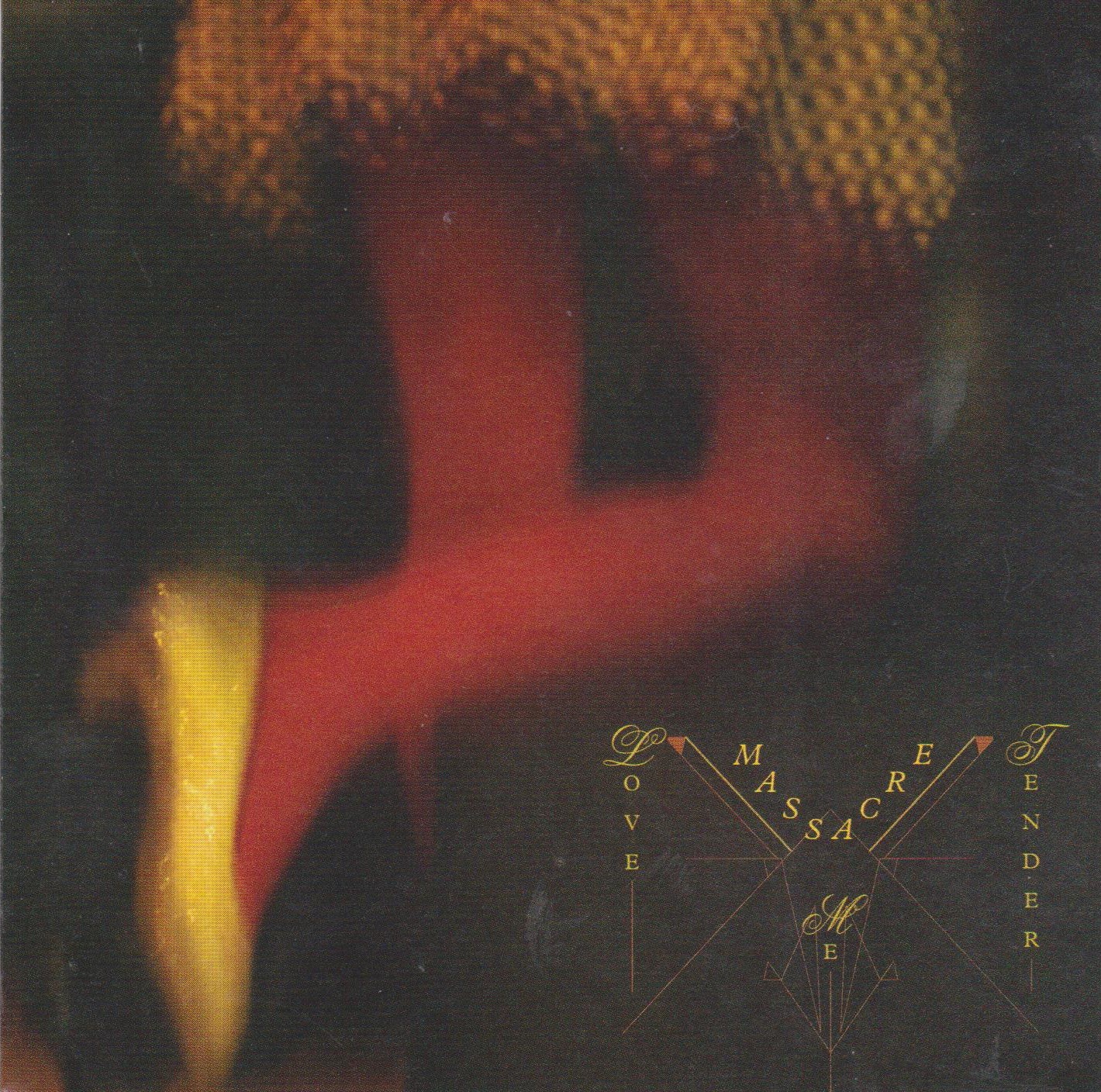
This mindblowing release appears to be something of a cousin to another recent Tzadik (John Zorn's label) release, Massacre's Love Me Tender (2013).

Love Me Tender, featuring Charles Heyward on drums, Bill Laswell on bass and Fred Frith on guitar, was a pastiche of live recordings in Europe edited by Frith and which shows the improvising power trio in a wide variety of aural settings, though dominated by Frith's remarkable fret work.

Similarly, The Prophecy, which came out in 2013, as well, is also a compilation of European live performances by a power trio, with Laswell joined by drummer Yoshida Tatsuya, best known from the Japanese band Ruins, in support of Zorn's wailing, screaming and probing alto sax.  As with Frith on the other recording, Zorn is the primary figure here and for fans, he delivers all of the great playing expected of the master.

But, although he is the front man, as Frith was for Massacre, the value of rhythm section should not be understated.  Laswell is not just a phenomenal bass player who can keep the bottom held down in support of soloists as well as anyone, but he can instantly switch with an array of pedals to a fuzztone, move into heavy and deep dub playing, morph into something like an electric guitarist, and throw in the riff from Black Sabbath's "Iron Man" seamlessly into the mix.


As for Tatusya, he is the third drummer to work with Zorn and Laswell as part of the PainKiller project.  Founding member Mick Harris, formerly of Napalm Death, was the (or one of the) creators of the "blast beat," and his playing was largely limited to the range of percussion he worked with in the grindcore world.  In fact, it has been said his sense of inadequacy when playing with the likes of Zorn and Laswell led him to forego drumming to move into electronics.

The great Hamid Drake, who mainly has played in the jazz realm, turned in an excellent performance in 2003's live recording for Zorn's 50th birthday celebrations.  His training gave a flexibility, variety and fluidity that notably transformed the sound.

With Tatsuya, there is something of a combination.  More or less a rock drummer, but with a wider range than Harris, if not as nimble and elastic as Drake, he turns in a very solid performance and meshes well with Laswell, while providing a solid foundation behind Zorn.  Tatsuya is given several minutes to solo and turns in a fine one.

The brief note on the OBI strip doesn't suggest this, but reviews indicate that The Prophecy might be viewed as a summary statement on the PainKiller project.  It is true that the last gig of the band was in Paris in 2008, when Harris surprisingly turned up to play drums and longtime Zorn collaborator Mike Patton contributed the screaming vocals Harris used to deliver in the early days.

Whether this album is the final word from PainKiller or not, it is another fantastic improvisational journey with Zorn and Laswell, with Tatsuya doing an excellent job.  A word has to be said about the crystalline engineering job by Oz Fritz, who has done a great deal of work with Laswell over the years, and makes the sound as good as can be obtained from a live gig.  Finally, Heung-Heung Chin's gorgeous artwork, a trademark of Zorn's Tazdik label, is worthy of noting, including the use of the photographic subjects of bones, teeth and the like, which are typically PainKiller-like.

Thursday, December 17, 2015

Massacre: Love Me Tender

After the remarkable guitarist Fred Frith left the British group Henry Cow in the late Seventies, he moved to New York and became acquainted with the rhythm section of Material, featuring drummer Fred Maher and bassist Bill Laswell.

Calling themselves Massacre, the trio released a 1981 studio album, Killing Time, and completed a slate of live performances before Maher quit the short-lived group.  Although Frith and Laswell formed another trio with Golden Palominos drummer Anton Fier and performed some Massacre tunes later in the decade, it was not until 1998 that the band was resurrected, this time with British drummer Charles Hayward of This Heat.

Signed to John Zorn's Tzadik label, the group recorded a studio album and two live recordings, one of which, Lonely Heart, was featured here in 2013, before Frith culled the archives of festival performances in Germany and Switzerland in 1999 and a performance in June 2008 in Italy to assemble Love Me Tender, released in 2012.

Because Massacre's music was improvised, it doesn't, to this listener, much matter whether the edited performances come across as "songs," despite the sequencing and titling, the latter drawn from poet Lyn Hjinian's mid-1970s collection Writing is an Aid to Memory.


What makes this album compelling is the wide array of sounds coaxed by Frith from his electric guitar, parallelled in many ways by Laswell's similarly experimental approach to playing the bass.  Hayward plays a bit of melodica and provides some wobbly vocalizations in addition to his steady and reliable drumming, providing a bedrock for his compatriots to build from.

It is difficult generally to point out highlights in terms of the "songs" listed on this recording, but there is one bright exception, which is the staggering "Shadow When Omitted."  Whatever one makes of Hayward's vocals, the performances on this nearly six-minute masterpiece of improvisation by Frith and Laswell are mindblowing.

Laswell spends the first part of the track playing with color and imbre on his playing, using devices common to his work, but as Frith develops a series of virtuoso solos employing his typical wide range of techniques and sounds, Laswell hits a couple of extended sequences of monstrous grooves that are just spectacular.

This, in turn, amplifies Frith's staggering playing, which, as much as he likes to experiment and use different techniques of picking and strumming, including the use of objects, there are solos that show him to be as fast and blistering, or more so, than any more popularly-known "guitar god." Of course, what sets Frith apart is his continuous spirit of experimentation, which is amply demonstrated on the rest of this album.

It is fair to characterize this album as a Frith showcase, though perhaps that has always been the case with Massacre's live and studio work.  This is not meant to downplay the work of Laswell, who is a maestro on an instrument not usually associated as a front-line one, or Hayward, who is an excellent drummer.  But, Frith is the centerpiece of this amazing ensemble and Love Me Tender, more than any of the trio's other releases, confirms this.

And, again, "Shadow When Omitted" is a stunning representation of what this great outfit can do and hopefully with continue to.

Thursday, May 7, 2015

Funkronomicon: Axiom Funk

Courtesy of the prolific and diverse Bill Laswell came this 1995 release on his Island Records-distributed Axiom imprint, highlighting a varied selection of funk-related music comprised of some previously-recorded tracks and material that had not been released.

With its fundamental contributions from keyboardist Bernie Worrell and bassist Bootsy Collins and an appearance on one track by George Clinton, the lineage with Parliament-Funkadelic is clear, but there are also elements representative of new formulations shepherded by Laswell that add to the appeal of this masterpiece.

For example, who else other than Laswell could get reggae rhythm legends Robbie Shakespeare (bass) and Sly Dunbar (drums) to appear with Clinton and Collins, as well as jazz pianist Herbie Hancock and alto master Henry Threadgill, all on one tune, "Under the Influence (Jes Grew)?  How about violinist Lili Haydn and the amazing guitarist Buckethead teamed with Collins and Blackbyrd McKnight (formerly with Hancock's Headhunters, P-Funk, Red Hot Chili Peppers and others)?

In addition, you've got among the last recordings of the phenomenal guitarist Eddie Hazel, the great alto sax player Maceo Parker, the amazing guitarist Gary Shider, a rare appearance from Sly Stone, Abiodun Oyowole and Umar bin Hassan from the legendary Last Poets, organist extraordinaire Amina Claudine Myers, and other fine musicians added to the mix.


Finally, what would an album like this be without the artwork of Pedro Bell, who illustrated so many classic P-Funk covers?   From the front cover image shown here, to a fantastic collage of images on another panel to the hilarious cartoon "Funkcronomixx: Wot Da Hell Is up?!", the use of Bell's work is a perfect capstone to a great album and it is worth noting that, in the credits, after Bell's listing is the phrase, ". . .And may we be forgiven for we know not what we've done."

A short essay (statement) on Funkcronomicon (a play on Necronomicon), employing clever wordplay, playful nonsense, a nod to the late Eddie Hazel, and possibly a hint of seriousness about what funk can do to shake up a complacent, overly-ordered and jaded word is attributed to Sir Lleb of Funkadelia!

Considering that the funk embodied by Clinton's Parliament-Funkadelic collective had its heyday in the late 1970s, Laswell's embodiment of "collision music," in putting together so many diverse musicians on Funkcronomicon nearly twenty years later is an impressive achievement.  Those expecting a rehash of the prime P-Funk era will be disappointed, but that would be the easy way out.  Channeling the spirit of the collective while moving the music in new and compelling directions is what makes this album so good.

As the label on the packaging calls it, this is music "probing the depths of futuristic funkadelia."  It is a great recording from Laswell and his P-Funk and other partners.

Saturday, January 31, 2015

Bill Laswell: Means of Deliverance

For some people, it's problematic enough to have to listen to a bass solo, but to endure an entire album of solo bass playing?

Well, Bill Laswell has made an amazing album, Means of Deliverance (released in 2012 on his Innerhythmic label), that uses a Warwick fretless acoustic bass instrument called the Alien to create a series of textures and tones that are familiar, yet also (yes) alien, when one things of the traditional electric or acoustic bass.

He also finds interesting ways to make the Alien a melodic instrument as well as a rhythmic one and it is his ability to make the bass sing, as well as his exemplary technique and use of atmospheric textures that gives Means of Deliverance its special qualities.

As with other solo albums, most notably the excellent 1999 release Hear No Evil (Meta Records), Laswell draws deeply from the experiences of his upbringing in Kentucky and Illinois and was once quoted about the hard impression made on his musical development by hillbilly music.

Oz Fritz, who has worked frequently as a recording engineer with Laswell, points out on his blog, "The Oz Mix," that Laswell's global travels, physically and musically, are encoded in the title of this album and in its contents.  Fritz refers to Means of Deliverance as "spacecreating," which is an excellent way of putting it.  The songs have their melodies, rhythms and other elements of structure, but there is an expansive sense of space between the notes and around the sound the Alien guitar makes.


In another interesting piece on the Sonic Scoop site, Laswell is quoted as discussing how life experience and the effects this has on the musical vocabulary, languages and improvisation lead to interesting stories that can be told through the music.  This excellent post notes that Laswell and his engineers Robert Musso and James Dellatacoma, longtime collaborators, employed a three-level recording method.  First were the rhythmic elements, the leads built off those rhythms, and finally drones from an e-bow or slide.  Up to six tracks are used on the record, even with its rather spartan feel.

On one piece, Laswell's wife Gigi Shibabaw, an Ethiopian singer with great emotive abilities who also produced the record, provides a plaintive and keening vocal.  A buzzing drone accompanies the warm tones of the Alien to make "Bagana Sub Figura X" a highlight of the recording.

It should also be noted that special consideration was given to equipping Laswell's Orange Music studio with an environment, along with the excellent work done by Musso and Dellatacoma, a gorgeous, full and clear sound, enhancing the listening experience.  Moreover, the mastering by Michael Fossenkemper at TurtleTone expertly works with the low end of the bass that Laswell is so adept at expressing.  As Fritz observes, you can almost feel Laswell's fingers hitting the strings because of the clarity and cleanness of the sound.  For a solo recording like this, there's an immediacy that is really palpable.

Fritz has another valuable observation:  Means of Deliverance has a progressive presence and that is an apt way to describe one of the most interesting of the legions of albums that Bill Laswell has produced.  It is an object lesson in creating a unique personal statement on one's chosen instrument and Laswell is to be saluted for making it and taking us with him on his journey.

Friday, May 16, 2014

Method of Defiance: Inamorata

Bassist and producer Bill Laswell's career has been a long and varied one, but few of his many recordings feature as many intersections of musicians as his Method of Defiance project's 2007 album, Inamorata

This album has a slew of renowned jazz performers from the 1960s onward like tenor saxophonist Pharoah Sanders, keyboardist Herbie Hancock, tenor player and flautist Byard Lancaster, sax player Dave Liebman and guitarist Pete Cosey. 

Younger jazz performers like trumpeters/cornetists Graham Haynes (son of the great drummer Roy Haynes), Toshinori Kondo, and Nils Petter Molvaer,  and keyboardist Craig Taborn are also on board. 

Frequent Laswell collaborators John Zorn, along with his Masada String Trio, guitar wizard Buckethead, former Parliament and Funkadelic keyboardist Bernie Worrell and table player and drummer Karsh Kale. 


Finally, as Method of Defiance, in its early incarnations, was heavily driven by the electronic bass 'n drum sound, a plethora of performers from that genre were matched up with the aforementioned musicians, including Paradox, Black Sun Empire, D Star, SPL, Fanu, Outrage, Corrupt Souls, Amit, Evol [misspelled "Evil" on the sleeve] Intent, Fanu and Submerged, the latter being Laswell's partner on the first M.O.D. album and who released this album on his Ohm Resistance label.

These recordings are uniformly interesting and entertaining and some of the performances are just outstanding, including the impassioned playing of Sanders, Liebman and Zorn (and the Masada String Trio's jittery strings with a mournful and brief interlude in the middle of the piece) on their tracks, "Ta' Wil", "Aibi Virus" and "Pattern Engine."  The cooler sounds of the several trumpeters provide a nice counterbalance, while Hancock, Worrell and Taborn use their keyboards to nice effect in providing another palette of sounds to contrast with the horns.  Notably, Cosey and Buckethead, both incredibly inventive and fast players, are somewhat muted here, using their guitars for color and ambience more than for blazing solos or heavy riffs.

The many electronic performers here work well with the other instruments, providing a diverse array of drum machine patterns, electronic percussion and processed sounds that make this more than a typical drum 'n bass record, introducing diversity in its mixings of "live" instruments in the horns, keyboards and guitars categories.  Karsh Kale's excellent table playing on "Aether" is also a highlight, especially as it dovetails with Molvaer's cool keyboards and Laswell's loping bass.  "Remains," featuring Corrupt Souls has several cool and varied electronic "riffs", a sampled voice intoning something about science and technology, and another solid Laswell groove on bass.  "Black Water" has a solid flow to it and Haynes' ultra-smooth cornet work is countered by Lancaster's hard blowing, while Laswell holds it all together with more great playing.

Holding much of this together is Laswell's bass playing--consistently in touch and integrated with the other sounds and highlighting his talent for holding down the bottom of a piece with little wasted effort and flashes of dub and jazz elements.  His work in bringing in a staggering array of jazz-based talent, mixed with Submerged's recruiting of electronic artists makes Inamorata an entirely successful foray into expanding drum 'n bass out of electronics and into a fruitful collaborative partnership with other instruments.

Method of Defiance:  Inamorata (Ohm Recordings, 2007)

1,  Ta' Wil
2.  Humanoid
3.  Hidden Killer
4.  Amenta
5.  Panepha
6.  Babylon Decoder
7.  Aibi Virus
8.  Anti-Jazz Glitch
9.  Black Water
10.  Pattern Engine
11. Aether
12.  Remains

Tuesday, February 18, 2014

Jali Kunda: Griots of West Africa and Beyond

This is another excellent release by the Ellipsis Arts label, in which kora master Foday Musa Suso, whose work has been highlighted on this blog previously, worked on selecting, coordinating and arranging the selections on this record.

There are fifteen tracks, most recorded in the west African nations of Guinea-Bissau, The Gambia and Senegal, with three featuring collaborations between Suso and Western musicians, including composer Philip Glass, jazz saxophone titan Pharoah Sanders, and the ubiquitous Bill Laswell, among others.  These three works are well-done and complement the more traditional pieces, although the liners do explain that "this recording was made with both authenticity and an international audience in mind," specifically in that "the length of the pieces has been substantially shortened."


That said, there are some marvelous pieces to savor on this record.  There are a few examples, moreover, of duplicated works, though usually with different instrumentation, vocalizations and in location.  For example, the bookend pieces, consisting of a Muslim invocation to Allah, includes a version from Senegal and another from The Gambia.  What is described in the notes as "the most famous Griot song," called "Sunjata," celebrating the warrior king who established the great Mandinka empire in the 1200s, has a version from Guinea-Bissau and another from Senegal.  And, the excellent "Lambango" has a version that uses the xylophone-like balafon and which was recorded in one community in Guinea-Bissau, while another, employing the harp-like kora is from another part of that country.  Another highlight is "Sorrie," a Mandinka tune from The Gambia that has great balafon playing.  One other piece to point out is "Yata Kaya," a Fulani piece from Senegal, which Suso stated was a favorite tune utilizing the one-string fiddle called the nyanyer and which represents the type of music that is starting to fade from the music scene in that country.
 
Of the three "fusion" pieces, "Spring Waterfall" is a Suso piece in which he used effects to create what is described in the notes as "cascading layers of the kora" with Glass playing a non-intrusive piano accompaniment.  "Lamnbasy Dub" has been featured in some compilations produced by Laswell and was originally released on an album called New World Power by Suso's The Mandingo Griot Society and released on the late, great Axiom label, in which he plays an electric kora, while Laswell employs the bass and samples, Jeff Bova, known for his ambient electronic music, plays electric keyboards, and frequent Laswell collaborator Nicky Skopelitis and Clive Smith utilize other programming.  Laswell's bass is particularly effective here.  Finally, there is "Samma," another standout on this record, in which Suso on kora is joined by Sanders on tenor sax for a great blending of instruments, expertise and melody and sound.
 
Ellipsis Arts put together a string of well-chosen, sequenced and produced "world music" recordings in the 1990s and Jali Kunda is an excellent example of the quality of the label's offerings, of which more will be featured here in the future.
 
Jali Kunda: Griots of West Africa and Beyond (Ellipsis Arts . . . 1997)
 
1.  Allah l'aake  2:38
2.  Sunjata  5:40
3.  Sinyaro  3:00
4.  Mariama  4:24
5.  Spring Waterfall  7:17
6.  Jula Faso  3:14
7.  Sunjata  3:03
8.  Lamnbasy Dub  8:19
9.  Jula Jekereh  4:42
10.  Lambango  2:42
11.  Samma  8:25
12.  Sorrie  3:32
13.  Yata Kaya  4:54
14.  Lambango  7:51
15.  Allah l'aake  3:30

Wednesday, January 8, 2014

Equations of Eternity: Equations of Eternity

Recorded over a year in 1995-96 at the personal studios in Milan, Italy; Birmingham, England; and Brooklyn, New York by the trio of experimental electronic musicians Eraldo Bernocchi (electronics, programming, treated guitars), Mick Harris (electronics, drum programming), and Bill Laswell (bass guitar and what is listed as "interstellar influence," whatever that may entail), Equations of Eternity is a fascinating excursion into a world of electronic ambience, solid programmed drumming, fluid and dubby bass playing and the occasional sampled voice.

Bernocchi, a collaborator with Harris on some notable albums on the Sub Rosa label during this period, produced and mixed the record, almost certainly after Harris and Laswell established the rhythms, and was likely the prime mover on the project, which spawned another excellent album, also on the WordSound label, in Vevè (1998).


The varied elements offered by the collaborators are excellent, enticing and intriguing.  Laswell's bass playing is particularly essential in holding down a reliable groove in tandem with Harris's spare, but well-chosen beats, while Bernocchi adds all manner of interesting textures, along with what are presumed to be contributions from Harris, as well.

Adding to the mysterious musical vibe is a quote from British mystic Aleister Crowley from his Book of Thoth:  "Pour water on thyself:  thus thou be a fountain to the universe / Find thou thyself in every star / Achieve thou every possibility."  Might be gibberish to some and profound truth to others, but this album has enough to recommend it with the well-organized layers of sound and Laswell's consistently-excellent bass playing that you could almost certainly take or leave the mysticism and just enjoy the electronic-ambient-dub grooves that flow unendingly from this fine recording.

Equations of Eternity:  Equations of Eternity (WordSound, 1996)

1.  The Collector  6:48
2.  Eons Geography  5:51
3.  5th Element  5:35
4.  Loa  6:31
5.  Stream  5:52
6.  Shadow Sewer  7:43
7.  Fifty Gates  4:34
8.  Descent  5:47
9.  Slow Bleed  5:52

Monday, October 28, 2013

Last Exit: Headfirst into the Flames, Live in Europe

Ronald Shannon Jackson, a masterful drummer who played with Cecil Taylor, Ornette Coleman and others and who fronted such bands as The Decoding Society, passed away on 19 October at age 73.  Jackson also had a long association with the omnipresent Bill Laswell, including holding down the rhythm section with the bassist in the stunning "free jazz" supergroup, Last Exit.

From their debut in 1986, Last Exit was devoted to completely improvised, live music with as much sonic firepower and as little political correctness as possible.  Jackson and Laswell had a formidable job trying to hold down the bottom while Peter Brötzmann on reeds and the sublime guitarist Sonny Sharrock were a formidable front line of screams, cries and other generally generous forms of musical mayhem.

A particularly interesting recording of the band is Headfirst into the Flames, recorded in 1989 in Munich and Stockholm and featuring the group in all of their wild and woolly glory.  Nine pieces stretching over an hour represent the epitome of Last Exit's fearsome power, masterful playing, sense of humor and perhaps among the purest forms of musical democracy one will find anywhere. 


An extra bonus is the adaptation of quotations by the American poet and novelist Kenneth Patchen from his experimental novel, The Journal of Albion Moonlight.  Titles include "Don't Be a Cry Baby, Whatever You Do;" "A Knight of Ghosts and Shadows;" "Hanged Man Are Always Naked;" "I Must Confess I'm a Cannibal;" and a favorite of this listener, "Jesus!  What Gorgeous Monkeys We Are."  Given Last Exit's free association live work (there was one studio album, the interesting Iron Path, which is utterly tame and almost melodic compared to the five live releases--Brötzmann, in particular, tends to shun the studio for the immediacy and connectivity of the stage), these titles are truly meaningless, but they sure are fun to read.

In any case, listening to any Last Exit album is an experience not to be found anywhere else in the wide panoply of music generally labeled "free jazz" and the chaos is held together by the amazing musicianship and, again, the able work of Laswell and Jackson.  The latter may not be a name many folks recognize, but his body of work from the mid-1960s onward is truly impressive.  His time with Last Exit and his playing on Headfirst into the Flames are an excellent testament to his abilities.  May Ronald Shannon Jackson rest in peace!

Last Exit:  Headfirst into the Flames, Live in Europe (Downtown Music Gallery, 2008/Muworks Records, 1993)

1.  Lizard Eyes  5:30
2.  Don't Be a Cry Baby, Whatever You Do  6:35
3.  So Small, So Weak, This Bloody Sweat of Loving  4:25
4.  Headfirst into the Flames  3:00
5.  A Knight of Ghosts and Shadows  6:25
6.  Jesus!  What Gorgeous Monkeys We Are  11:01
7.  Hanged Man Are Always Naked  10:05
8.  No One Knows Anything  5:15
9.  I Must Confess I'm a Cannibal 10:40

Monday, July 29, 2013

PainKiller: Execution Ground

John Zorn, Bill Laswell and Mick Harris have all been profiled on this blog before, but their project called PainKiller, which existed primarily from 1991 to 1998 and featured a brief reunion in Paris five years ago, featured a form of musical expression borne largely out of Zorn's late 1980s fascination with "grindcore." 

This genre of metal consisting of extremely fast, intense, short bursts of buzz-saw guitars, guttural grunted and/or high pitched screamed vocalizing, rapid and intense "breakbeat" drumming, and imagery and lyrical content (should one find printed versions, because deciphering the vocals was all but impossible) largely pioneered by Napalm Death, for which Harris was drummer until he left in 1990.  Zorn's grindcore obsession first manifested itself in his Naked City project, launched in 1988, but which included a typical Zornian smorgasbord of sounds from country to cartoon music to lounge jazz to surf music, as well as those blasts of grindcore played by such luminaries as guitarist Bill Frisell, drummer Joey Baron and the mighty Fred Frith on bass (rather than his usual guitar pyrotechnics.)

While Harris spent most of his career forsaking the drum set for projects like the so-called "darkwave" electronic music of Scorn, the glacial and involving ambient sounds of Lull, and a host of other projects including the mind-blowing collaboration of Eyeless in Gaza's Martyn Bates in the phenomenal trilogy of Murder Ballads recordings, he did resume his work with the kit in PainKiller for the golden opportunity of playing with two musical masters in Laswell's stellar bass work and the idiosyncratic alto sax playing of Zorn.

The first two records, Guts of a Virgin and Buried Secrets, both recorded in 1991 and released on the Earache label (Napalm Death's label), were short albums of roughly 25 minutes each featuring generally brief pieces of grindcore-influenced music, albeit with superior musicianship from Laswell and Zorn.  The latter recording actually did feature longer pieces, two of which topped the six-minute mark (which in the early Napalm Death days could  include a half-dozen or more pieces,) but there was only a slight derivation in overall sound.


After a hiatus, however, PainKiller reunited in June 1994 for the third album, the fascinating Execution Ground, which was released initially on the Subharmonic label which released Laswell's frenetic output at the time.  Reflecting Laswell's growing interests in dub, ambient, and world music, this album featured some of the pounding grindcore sound, but more often morphed into strange and compelling excursions into wide-open sonic spaces largely influenced by dub and ambient textures, while the titles reflected the fascination Laswell had with India.  There was an entire disc devoted to ambient reworkings of two of the three tracks on the first CD and reveal a side to the PainKiller project in which ample space proved to be no problem for the trio to revise their sound into something different but highly compelling.

Later in 1994, the trio embarked on a tour of Japan, a place that proved highly receptive to PainKiller's music.  In fact, there were eventually three live recordings generated from Japanese performances over the band's lifespan. 

When, however, Zorn sought to reunite the group for his amazing 50th birthday series of live performances and recordings in 2003, Harris declined to take part, his insecurity in his drumming having grown more prominent over the years.  Hamid Drake, an excellent percussionist, filled in and a great performance was had, though purists might balk at not having Harris present. 

As noted above, a one-time reunion show was played in Paris in 2008 and Harris reluctantly took his place behind the kit.  He seemed, from the videos available on YouTube, to have played well enough, but no recordings have been issued and it appears likely that PainKiller has ceased to exist.

This is certainly difficult music and its intensity, power, disturbing cover art, and more is probably forbidding to most.  But, for those who like adventurous music and can leaven their grindcore with dub and ambient (how many of you are actually out there?), Execution Ground is up your alley and then some.  It is truly a unique and memorable musical excursion, even if it might leave you with disturbed dreams afterward!

The album, with excellent engineering from Oz Fritz on the first disc and Robert Musso, assisted by Layng Martine on the ambient disc, was packaged in 1997 with the first two albums and a live recording in Osaka as the four-disc box set Collected Works and kudos have to be given to Tomoyo T.L. for some of the most evocative and hauntingly beautiful cover art likely to be found anywhere--a trait found with many projects released on Zorn's Tzadik label.

PainKiller:  Execution Ground (Subharmonic, 1994; Tzadik, 1997)

Disc One
1.  Parish of Tama (Ossuary Dub)  16:05
2.  Morning of Balachatudasi  14:45
3.  Pashupatinath  13:47

Disc Two
1.  Pashupatinath (Ambient)  20:00
2.  Parish of Tama (Ambient)  19:19