The years from 1983 to 1989 when The Jam's Paul Weller changed musical directions with The Style Council after referred to by some as his "lost years." Obviously, the sounds were dramatically different, although the last year or two of the former showed signs of Weller's move towards a poppier, soul and R&B direction. And, there are those who think that Weller's famous decision to disband The Jam at the height of its popularity was less about a noble effort to not milk the successful formula of the group so much as a canny recognition that the British music scene was changing--away from guitar-based rock to synthesizer-based pop.
Whatever the case, Weller's formation of The Style Council definitely downplayed the guitar for keyboards, funk bass, a more finely honed sense of melody, and other elements that were closer to the pop world. It also featured a determinedly fashion-conscious imagery that led some to call it highly self-conscious and pretentious. But, what differentiated the band from legions of other groups of that often-maligned era of the Eighties, is that Weller's politicized lyrics actually became sharper and more direct than they were in the musically harder-edged The Jam.
Moreover, his forays into other musical styles provided, at least for the first half of the six-year tenure of TSC, a diversity that was not to be found elsewhere. This changed by 1987 when the group's light dimmed dramatically and, when Weller decided to indulge his interests in the newly-emerging house music scene by the end of the decade, his longtime label, Polydor, rejected his house album,
Modernism: A New Decade.
Fortunately, Weller had the talent and perseverance to take a break, refocus, retool, and recognize that there was another shift in musical direction back to guitar music in the early 90s, leading to a solo career that, pushing 25 years now, has been remarkably successful.
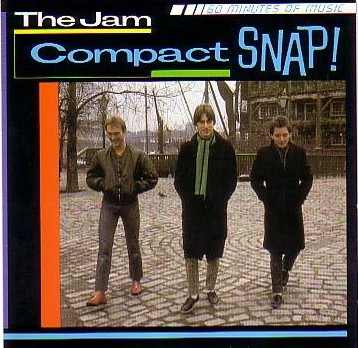
This listener, as is often the case, got into The Jam just after their breakup. Actually, seeing the video for "A Town Called Malice" was the first time encountering that remarkable group, but it was just after the September 1983 release of the stellar compilation
Snap! when a strong passion for the band's music took root.
Meantime, Weller had moved on, joining forces with keyboardist Mick Talbot and guest musicians. In March 1983 he released The Style Council's first single, "Speak Like a Child," followed by a couple of other singles and a pair of EPs, including the
Introducing The Style Council record that was loaned by a friend.
That same friend wanted to see TSC when they came to Los Angeles for two shows of four (the others in New York) for a very short (and the only in the band's history) American tour at the end of the year. Work commitments, though, prevented attending, but the thought was they would return soon enough. It was another nine years before Weller returned to Los Angeles and seeing three of his solo concerts proved to be great experiences watching a stellar musician at his best.
The Style Council's debut record was called
My Ever Changing Moods in the U.S. (
Café Bleu--obviously too "European" a title for American tastes?) after the title track, their lone Top 40 hit and one of Weller's best songs. The record had jazz-drenched tunes, a rap, keyboard romps, and other assorted sounds, with Weller not even singing on several tracks--an indication of this view that the group was actually more of a collective.
That soon changed, though, with the release of the second album,
Our Favourite Shop in the U.K. and
Internationalists in the States. By then, there was a set band with drummer Steve White and a phenom still in his teens, backup singer D.C. White (soon to be married to Weller), with bassist Camelle Hinds joining the group slightly later.
Internationalists is certainly a more cohesive and unified album than the debut and the quality of the songs is more consistent, while the diversity of sounds is still present, if not quite as pronounced. The album began with a somber, but highly effective meditation on joblessness, the uprooting of families, and anger towards the Thatcher government in "Homebreakers." An uptempo soul-funk workout, the title track declared that the band considered itself citizens of the world, rather than of a provincial nation--Weller was actively supporting Socialist causes at the time.
Another anthemic piece that was the first single and charted at #6 in England is "Walls Come Tumbling Down," which opens with the growled "You don't have to take this crap / You don't have to sit back and relax," the last part of the couplet apparently referencing the long-forgotten, but then-wildly popular Frankie Goes to Hollywood and their "Relax" hit. "The Lodgers" features another lyric about social malaise with a great bassline and solid White timekeeping, while D.C. Lee gets some prominent vocalizing on a top-notch track.
Another highlight is "With Everything to Lose" with a Latin rhythm, a nice flute intro and a lyric written by the drummer for a song that Weller had already completed called "Have You Ever Had It Blue?" Weller rightly noted that White had written a fine lyric and quickly recorded the album version. "A Stone's Throw Away" appeared with a string quartet and Weller's vocals and feature another excellent lyric about the widening gap between rich and poor in Thatcherite Britain. The strings provide a nice understated backing to the singing--and it should be said that the change in Weller's singing from his days in The Jam was striking.
"All Gone Away" has acoustic guitar over a beguiling samba rhythm and Weller's near falsetto talking about the decline of small towns and, if anything, may be too brief at 2:17, but it's a fine song and perhaps an interesting comparison to The Jam's "Man in a Corner Shop." There were complaints about "Come to Milton Keynes," a slap at faceless modern planned communities, but White's drumming is given a beautiful sound to accompany his always-fine playing, while Weller's melody moves along nicely. "Boy Who Cried Wolf" is all-electronic and features more of Weller's newly-developed and emotive croon.
Church bells introduce "A Man of Great Promise," with another fine melody and lyrics about Dave Waller, a musical associate of Weller from the early days of The Jam and who died of a drug overdose. A lilting rhythm of acoustic guitars, keyboards and cymbals underlie the interesting "Down in the Seine," which includes an accordion and Weller's singing of alternate verses in French, reinforcing his continental and, specifically, Parisian obsession.
The oddball tune is "The Stand-Up Comic's Instructions," with a popping bass, bluesy guitar licks and a Weller-sung chorus following the deep intonations of black British comedian Lenny Henry about racism. It's been considered half-baked by some, but is part of the diversity of sound that makes the album intriguing in its catholic ambitions.
Internationalists marked the peak of The Style Council's tenure, hitting #1 on the British charts, though, predictably, doing poorly in America, which has just never made much of Weller's Anglo-centric approach (though this blogger has never seen his to be an issue.)
The follow-up was two years later and, by then, Weller's decision to narrow the sound to the "northern soul" genre that was popular in England led to the "Cost of Loving" album to be considered too one-dimensional and lacking in passion and quality songwriting. This blogger, an eager follower of the band to that point, passed on buying it after a listen of my brother's copy.
"Lost years" is hardly a term to describe the sea change that was The Style Council. For a few years there, Paul Weller eagerly mixed a variety of sounds and wrote some of his best songs. After 1985, though, the situation changed significantly, though there were enough moments in 1988's
Confessions of a Pop Group that, for this listener, made the album's return to diversity rewarding for the most part.
The purchase a few years back of the 5-disc retrospective
The Complete Adventures of The Style Council reflects the dichotomy of those halves of the band's existence. The first two-and-a-quarters discs are generally brilliant, much of disc four with the
Confessions material is quite good, and then there is the infamous
Modernism and related pieces on the little-played fifth disc. Yet, Weller deserves a lot of credit for being willing to try new musical approaches, distance himself from The Jam's iconic sound, and come up with a good deal of very fine music during what was often a dreary decade in the rock scene. His revival in the early 90s led to the "lost years" tag being hung on The Style Council period, but it unfairly negates the often-superlative work he produced.