Sunday, February 21, 2016

PainKiller: The Prophecy

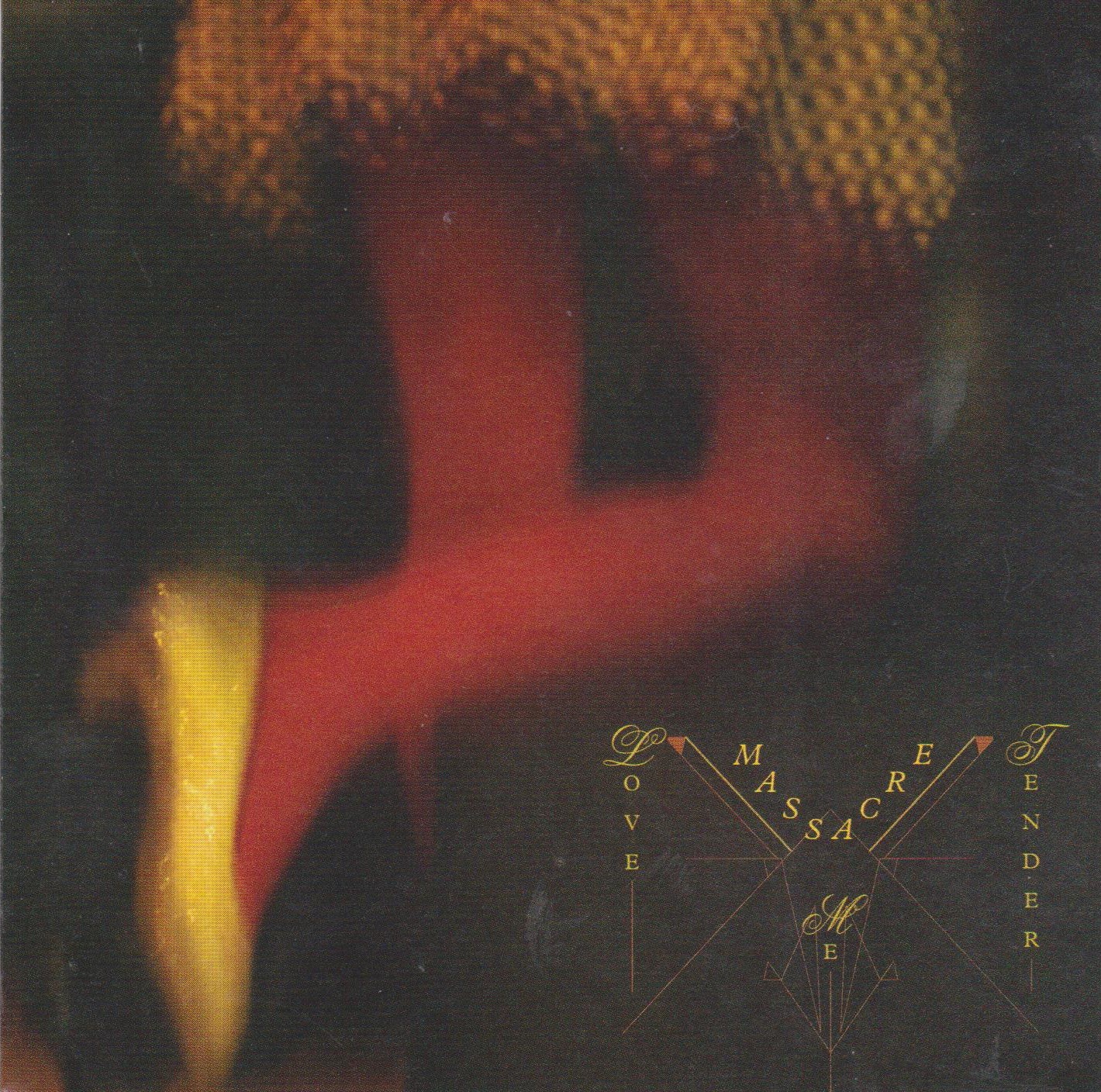
This mindblowing release appears to be something of a cousin to another recent Tzadik (John Zorn's label) release, Massacre's Love Me Tender (2013).

Love Me Tender, featuring Charles Heyward on drums, Bill Laswell on bass and Fred Frith on guitar, was a pastiche of live recordings in Europe edited by Frith and which shows the improvising power trio in a wide variety of aural settings, though dominated by Frith's remarkable fret work.

Similarly, The Prophecy, which came out in 2013, as well, is also a compilation of European live performances by a power trio, with Laswell joined by drummer Yoshida Tatsuya, best known from the Japanese band Ruins, in support of Zorn's wailing, screaming and probing alto sax.  As with Frith on the other recording, Zorn is the primary figure here and for fans, he delivers all of the great playing expected of the master.

But, although he is the front man, as Frith was for Massacre, the value of rhythm section should not be understated.  Laswell is not just a phenomenal bass player who can keep the bottom held down in support of soloists as well as anyone, but he can instantly switch with an array of pedals to a fuzztone, move into heavy and deep dub playing, morph into something like an electric guitarist, and throw in the riff from Black Sabbath's "Iron Man" seamlessly into the mix.


As for Tatusya, he is the third drummer to work with Zorn and Laswell as part of the PainKiller project.  Founding member Mick Harris, formerly of Napalm Death, was the (or one of the) creators of the "blast beat," and his playing was largely limited to the range of percussion he worked with in the grindcore world.  In fact, it has been said his sense of inadequacy when playing with the likes of Zorn and Laswell led him to forego drumming to move into electronics.

The great Hamid Drake, who mainly has played in the jazz realm, turned in an excellent performance in 2003's live recording for Zorn's 50th birthday celebrations.  His training gave a flexibility, variety and fluidity that notably transformed the sound.

With Tatsuya, there is something of a combination.  More or less a rock drummer, but with a wider range than Harris, if not as nimble and elastic as Drake, he turns in a very solid performance and meshes well with Laswell, while providing a solid foundation behind Zorn.  Tatsuya is given several minutes to solo and turns in a fine one.

The brief note on the OBI strip doesn't suggest this, but reviews indicate that The Prophecy might be viewed as a summary statement on the PainKiller project.  It is true that the last gig of the band was in Paris in 2008, when Harris surprisingly turned up to play drums and longtime Zorn collaborator Mike Patton contributed the screaming vocals Harris used to deliver in the early days.

Whether this album is the final word from PainKiller or not, it is another fantastic improvisational journey with Zorn and Laswell, with Tatsuya doing an excellent job.  A word has to be said about the crystalline engineering job by Oz Fritz, who has done a great deal of work with Laswell over the years, and makes the sound as good as can be obtained from a live gig.  Finally, Heung-Heung Chin's gorgeous artwork, a trademark of Zorn's Tazdik label, is worthy of noting, including the use of the photographic subjects of bones, teeth and the like, which are typically PainKiller-like.

Thursday, February 4, 2016

John Coltrane: Giant Steps

This is the album, recorded in May and December 1959 and released on Atlantic Records, that fully established John Coltrane as a masterful player, composer and bandleader, when it was released in January 1960.  On the heels of Miles Davis's Kind oi Blue, on which Coltrane was a stellar contributor, and out the same year as Ornette Coleman's revolutionary Free Jazz, Giant Steps was one of the indicators of where jazz was heading in the new decade.

The paths (there are almost always several) would not be easy to trod, as old-school critics howled in derision and anger about what the so-called "avant garde" was doing, while clinging to the old verities of bop, hard bop and the preexistng styles that were being challenged.

Coltrane, universally known as a kind, gentle, spiritual man not given to contentious arguments about anything, became the object of vitriol and scorn totally unfair to both the man and musician.  More than a half-century later, it seems quaint and laughable to imagine Coltrane's "giant steps" towards a different way of playing jazz being a threat to anyone.

The damnations were enough, evidently, so that a series of albums through 1964 showed Trane moving more frequently into more melodic and traditional territory, through "My Favorite Things", albums with Duke Ellington and Johnny Hartman, the recording of classic standards, and right up to the solemn and gorgeous Crescent.

But, it was first Giant Steps, then elements of the remarkable Africa/Brass, and especially the staggering Live at the Village Vanguard (its complete package gives the fan three additional discs of glorious playing at that December 1961 engagement) that invited the withering scrutiny of critics, most of whom couldn't play an instrument, compose or do anything that gave them the mantle and aura of authority they assumed.


So, the music.  The original seven-track album has classic after classic. The mind-blowing speed, precision and technical mastery of the title track is legendary and it has been a challenge for sax players ever since to take the tune on and do what they can with it.  "Cousin Mary," named for Coltrane's relation and keeper of the flame when it came to his Philadelphia home being a historic site, was long a standard in Trane's repertoire.

"Syeeda's Song Flute," named after Trane's adopted daughter by his first wife, is another joyous piece.  "Mr. P.C.," a tribute to longtime Davis and Coltrane bassist Paul Chambers, is one of the more recognizable melodies in Trane's discography and a live favorite for years.

Finally, there's "Naima," in honor of the composer's first wife, and simply one of the finest ballads, not only of Coltrane's work, but of anyone's.  Like "My Favorite Things," it was a standard piece even when the music went totally free and to hear a version of the song from, say, the second Village Vanguard album in 1966, compared to the earlier one from Giant Steps is an interesting way to hear just how much Coltrane's sound developed over those five years.

Trane was still about a year away from solidifying his band with the "classic quartet" of McCoy Tyner, Jimmy Garrison and Elvin Jones.  He had Chambers as his anchor at the bass, Art Taylor on drums and Tommy Flanagan at the piano.  For "Naima," drummer Jimmy Cobb and pianist Wynton Kelly, both from the Davis band and Kind of Blue, brought their soft, sensitive touches to the classic.  Then, for "Giant Steps," Lex Humphries was at the kit and Cedar Walton played piano.  All of these musicians were excellent at their instruments, though there has been much said especially about the struggles some had with the speed and complexity of some of the tunes, particularly the title track.

But, Coltrane kept trying other musicians on subsequent records until he first secured Tyner, then Jones and, finally, Garrison and the "classic quartet" went on that momentous four-year run that culminated with A Love Supreme in 1965.  Still, even if Trane's greatest work was in that 1961-65 period with that quartet, Giant Steps, following from the great start of 1957's Blue Train, was the album that put Coltrane in the front ranks of jazz's greatest players, writers and leaders.

Sunday, January 31, 2016

Ludwig von Beethoven: String Quartets, Vol. 1 (Op. 18, Nos. 1 and 2)

Reading John Cage's remarkable book Silence currently, it becomes very obvious that the famed experimental composer had a particular dislike for Ludwig von Beethoven.

Much of this may have been particularly musical, but a good deal seems also to have been because of the arch conservatism in the classical world that kept the fires burning for the standard composers from Bach to Mozart to Beethoven to Brahms to Wagner and so forth.

It is understandable that innovative modern composers, such as Cage and Harry Partch, were concerned that there was not enough opportunity given to those looking to move beyond traditional composing methods.  This listener is fascinated with the music of both of these amazing figures, along with other modernists whose work has been highlighted here.

At the same time, there is admiration for the stunning work of the earlier masters, as well, and there is no reason that Beethoven and other giants of the pre-modern world cannot be enjoyed just as much as later-day experimenters.

Anyway, this Naxos recording from the early 1990s presents the first two of Beethoven's string quartets.  Composed between 1798 and 1800, while Beethoven in his late twenties, as he was straining to move beyond the teachings and influence of his tutor, the great Franz Josef Haydn, these works show a composer who was already creating rich, complex and beautiful music that showed the way beyond Haydn and Mozart as a new century dawned.


The theme in the first movement of the first quartet, in F major, is a well-known one and it takes the listener into a very lively, dramatic and bright environment.  The second movement is subdued, slower and achingly beautiful and was said by the composer to have the famed burial vault scene in Shakespeare's Romeo and Juliet as inspiration.  The short third movement has another famed theme and has a notable rhythmic component to it, as well as a series of memorable melodic statements.  The concluding allegro movement is an amazing technical exercise that bursts with all kinds of remarkable interplay among the instruments and is a stunning finale to a remarkable first quartet by the master.

The second quartet, in G major, sounds simpler and was named "Complimentary Quartet" after its resemblance to the late works of Haydn because of its light and graceful touch.  This blogger is a great admirer of Haydn, so it is easy to enjoy this work, which abounds in gorgeous melodic statements and sprightly rhythms.  The economical presentation of this piece, at about 23 minutes, compared to the roughly half-hour length of the first quartet, is also worth noting, as it moves along with effortless pacing between the faster and slower movements and the fine formalistic interplay among the instruments.  The beauty of slower second movement is also something to behold--more gorgeous melodic work and harmony here.

To this untutored ear, the Kodaly Quartet from Hungary perform this music with great sensitivity, passion and telepathnic interplay and the recording quality is very good.  This is another stellar release from Naxos, though a  recent purchase of Beethoven's complete string quartets, spanning eight discs from the British Nimbus label, is being listened to now and it also presents this amazing music beautifully.

Thursday, January 28, 2016

Peking Opera/Dalian Troupe: The Forest on Fire/The Princess Hundred Flowers


This 1994 release from the French label, Musique du Monde, presents two pieces of Peking Opera, a form of music and theater that began in the late 18th-century, including "The Forest on Fire," a 28 1/2 minute work, and "The Princess Hundred Flowers," which spans some 46 minutes.  This excellent performance was recorded at Dalian Opera in Liaoning province in March by Francois Picard, who also provided the informative liner notes.

As with any type of performance that marries music with visual theatrics, including acrobatics as well as speech, singing and instrumental work, recordings can only provide some approximation of the experience, but the music is remarkable and striking.

Percussion is a major element, unlike in much of European opera, with drums, clappers (guban), various-sized gongs, and cymbals employed to vivid effect.  Strings include the jinghu, a Peking fiddle, the erhu, another fiddle, and a few types of lute-like instruments.  Wind instruments include mouth organs (sheng), the dizi, a flute, and the suona, a flared shawm, a distinctively high-pitched dual reed horn.

The vocalizing is. of course, just one element of the amazing work done by elaborately dressed and masked characters, being Zhang Dingbian in "The Forest on Fire" and the title character of Princess Hundred Flowers.  Volume, tonal control, and the emphasis on dramatic phrasing are key to the purely musical aspects of the performance, because the acting, including facial expressiveness, very precise gesturing and body movement are key.

In fact, to some ears, much of this music, both instrumental playing and singing, can be jarringly  shrill, tonally and harmonically foreign, and melodically off-putting.  It does take some time and effort to reorienting the Western ear to the sounds of this amazing music, just as it does for other forms of "world music," whether this be the Indian raga, African tribal music, gamelan, sufi music, Turkish mevlana, and many others.

Repeated listenings bring out the complexity, dynamic range, expression and variety of sounds that make Peking Opera a truly enriching experience and the virtuosity of the musicians and performers is stunning.

Performances of this art form are still offered, though there have been changes in recent years after outright bans during the cultural revolutions under Mao Tse Tung, but opportunities in America to see authentic operas are rare.  Perhaps some day, this blogger will get the chance to attend a performance and move from the detached musical appreciation to the immersion of a fuller experience.

Tuesday, January 26, 2016

Son House: Delta Blues

One of the masters of the acoustic blues tradition from the Deep South, Son House was born outside of Clarkdale, Mississippi (fans of Led Zeppelin's Jimmy Page and Robert Plant will recognize that reference) in 1902 and then spent much of his early years in Louisiana.  He was a Baptist preacher as a teen and didn't start playing guitar until his later twenties, working with Willie Brown, who is heard on some of these recordings.

Quickly, House became a name in the blues world and had an influence on such legends as Robert Johnson and Muddy Waters. It is said that Johnson's remarkable transformation as a guitar player was due, in no small measure, to his keen and close observation of House's technique.  Another master bluesman, Charley Patton, made a connection for House with Paramount Records, which recorded eight tracks with House in early 1930.

It was more than a decade, though, before House got another session, this time with Alan Lomax, who found him in Mississippi in summer 1941.  Getting together with his old partner, Brown, House recorded the first five songs on this 2003 Biograph disc with assistance from Fiddlin' Joe martin and Leroy Williams on four of the pieces.


Lomax came back the following year with a partnership with the all-black Fisk University of Nashville, and recorded more of House's performances, including the nine that close out the album.  Unlike the first session, the 1942 dates find House working solo and, it being wartime America, he even added a new tune, "American Defense" to the selections, all of which were attributed to him.

With the 1930 and 1941-42 sessions constituting the body of his recorded work, House moved to Rochester, New York, where he lived after 1943, but it was another twenty years before he got back into a recording studio.  As the folk revival exploded in the late 1950s and early 1960s, a rediscovery of blues artists, including those who played acoustic, took place.  In 1965, Columbia Records recorded an older and more wizened House in a series of sessions that are captured in a two-disc complete box that will be featured here some day.

With his career brought back to life, House kept busy for several years until health problems slowed him down, though he lived on until fall 1988 when he died of complications from throat cancer at the age of 86.

This "Delta Blues" compilation of what is now referred to as "The Original Library of Congress Sessions from Field Recordings" from 1941-42 are full of fleet guitar performances, House's powerful county blues vocalizing, and on those early pieces, some fine accompaniment on guitar and harmonica.  Though the conditions were far more primitive-sounding than what he put down on tape in the mid-Sixties, the passion and soulfulness of these fourteen gems are among the greatest of blues recordings.

Friday, January 15, 2016

David Holland Quartet: Conference of the Birds

Master bassist Dave Holland has had a remarkable career, starting in England and flowering when he was recruited to play with Miles Davis in 1969.  His speed, power, flexibility and tremendous sense of time made him one of the greatest bass players of his era.

He has had, however, relatively few dates as a leader, but his 1973 (recorded late 1972) ECM album Conference of the Birds is an exceptional recording and a true classic of experimental jazz that has the rare virtue of employing two of the giants of modern saxophone: Anthony Braxton and Sam Rivers.  Any fan of these two knows this was the sole recorded meeting of these venerable figures and they make the most of it, thanks to the stellar rhythmic support of Holland and drummer Barry Altschul.

Holland very simply explains that the title came about because of a regular "conference" of birds singing in his apartment's garden early in the mornings and the spirit of these performances were to be shared with other musicians and people broadly.

The opening tracks "Four Winds" has a nice, memorable melody and then the quartet takes off with a tight and telepathic performance that features an angular and elliptical solo by Rivers, whose sense of timing in working with the deep grooves established by Holland and the precise timekeeping of Altschul is really something to behold.

Rivers may have been seen as "far out" in the "free jazz" sense, but he also was masterful in working with rhythm sections in his playing, as aptly demonstrated here.  Braxton joins in toward the end, the two rephrase the theme, and then Braxton works his way with some melodic expression before taking off into the stratosphere, taking Holland and Altschul with him in some very powerful moments.

Braxton's playing has been depicted as cold, intellectual, and forbidding, but with Holland and Altschul hewing to a steady groove, his playing meshes well, just in a very different way than that of Rivers.  Towards the end, Rivers jumps back in for some spirited back-and-forth with Braxton and the theme is restated to close out a staggering display of performance.


After that blazing opening, "Q & A" starts off more quietly, but with a particularly inspired choice in having Altschul demonstrate a broad tonal range of percussion.  He's been accused of being too busy and showy, but this is an excellent example of how a great drummer utilizes the full resources of a kit.  The horns enter with Rivers on flute and Braxton on clarinet and the combination works really well in the context of the call-and-response format the title indicates.  Holland goes arco in some of his playing, as well, moving the piece into more of an atmospheric evocation of sound, but the piece never meanders unnecessarily, partially because that rhythm section keeps the proceedings well grounded.

Holland takes a solo turn on the title track and, invariably, many people shudder at the thought of listening through another interminable bass solo.  Holland, however, keeps it short and then gets into a nice strumming groove with the melodic statements offered by Braxton and Rivers on clarinet and flute.  Altschul mainly keeps things simple on cymbals for color.   The overall effect is a beautiful and classic piece.

"Interception" moves things back into speedy territory, much like "Four Winds" and Rivers takes the first solo, followed by Holland's strong and nimble solo.  After a restatement of the theme, in comes Braxton for his distinctive voice as he utilizes a variety of resources, including overblowing, long sinuous runs and voice-like statements in his amazing work before the ensemble returns to the theme and closes out with an Altschul solo.

"Now Here (Nowhere)" begins with a subdued intro and interplay between the horns and bass with some percussive effects and is another example of emotion, economy and interplay that shows that "free jazz" can also be highly melodic, atmospheric and imaginative.

The closer is "See Saw" and Rivers begins again, with his solo another example of how well he integrates with the bass and drums--just a gorgeously executed performance from a greatly-underappreciated master.  A brief evocation of the theme then leads to Braxton and it is another broad expression and a roaring solo at that.  When Rivers joins back for the end, there's a sense that this remarkable recording, being the only meeting between these two giants and supported and promoted by a sterling rhythm section, is a truly rare example of how experimental jazz is at its most successful.

Holland may also be somewhat underappreciated, if not for his playing, then at least for his ability to compose excellent material and then recruit some of the finest musicians in jazz to execute a stellar album.  Conference of the Birds is a summit of selfless musicians at their best and ECM, a new label at the time primarily formed to record Keith Jarrett deserves all praise for recording it.

Sunday, January 10, 2016

Iannis Xenakis: Phlegra/Jalons/Keren/Nomos Alpha/Thalleïn

This selection is not only because Iannis Xenakis, a Greek born in Romania and long based in France, was such a compelling and fascinating composer exploring the boundaries of music, but becaise one of these compositions, "Jalons," was dedicated in part to the conductor of the piece, performed by the Ensemble InterContemporain--this being Pierre Boulez, the great composer and conductor, who died last week at 90.

Xenakis began his work, in the early 1950s, as Boulez, Karlheinz Stockhausen and other composers were working to change so-called "classical music" from its orthodoxy in harmony, melody, time and other aspects to what has often been referred to as "avant-garde music."  His training as an engineer and architect led him to develop a mechanism for adopting mathematics into his composition, including some of the earliest uses of computer programming for scores.

As a trained engineer and architect, however, Xenakis did not utilize the formal training of even some of the most modern of composers, such as Boulez, who was critical of Xenakis' lack of technical knowledge and expertise, and it was about a decade before the latter conducted a work of the former that he commissioned.

Xenakis once said that his musical outlook was directly related to the horrible experiences of his days in Greece during World War II and the revolutionary aftermath in that country, during which he lost an eye fighting during the civil war.  Much of his output, to this untrained listener, is atonal, dissonant, dark and riven with tension, though it was assumed this was more about the intellectual and aesthetic aspects of the boundary-pushing efforts the composer pursued.


This 1992 release of material recorded by the Ensemble Intercontemporain and soloists from two years prior has a fine sound, complementing challenging and rewarding material from Xenakis and tremendous performances from the group and its soloists.

"Phlegra", written in 1976, is fascinating with its shifting harmonies among eleven instuments in a chamber orchestral setting, reflecting a sort of abrasive order among chaos.  There is a fascinating, undulating beauty, though, in the crests and descents of the score and energetic use of polyphony and the musicians of the Ensemble Intercontemporain do a fantastic job with this complex, layered and mesmerizing work, which has to do with fighting between the Titans and the gods of Olympus from Greek mythology.

"Jalons" was commissioned in 1986 and whatever conflicts had existed between Boulez and Xenakis seemed to have dissipated somewhat by then.  The complexity of "Phlegra" is very much present, but there is a richer, broader sound to this untutored ear, due probably to the larger ensemble size of fifteen musicians.  Shifting masses of sound distributed throughout the instruments of this "mini orchestra" are always interesting and, like in "Phlegra" there is no soloing--this is all about the wonders of ensemble interplay.

By contrast, "Keren" (Hebew for "horn") is dedicated to a solo for one of the instrumnets that so rarely is spotlighted in that format: the trombone.  Last June's post on Luciano Berio's Sequenza series brings to mind that one of the fourteen works in that set was also for trombone.  Benny Sluchin does a superlative job of demonstrating the range of what the instrument can do as conceived by Xenakis, including guttural  sounds, glissando and all kinds of expressive dynamics, as well as melodic lines.  After the intensity of the first two pieces, "Keren" is a nice break, even though it is characteristically experimental and searching in its development.

1965's "Nomos Alpha" moves into another solo spotlight, this being for Pierre Strauch's wonderful cello, as worked out in mathematical formulas that take the cello beyond its typical use into stunning displays of dynamics, including a "doubling" effect that is really something to behold.  Like the trombone, the cello is not usually thought of as having a wide range of application in sound, though it is a foundation of string quartets.  In the hands of Xenakis and Strauch's enormous efforts, the cello becomes as expressive an instrument as any.

In 1984, Xenakis wrote "Thalleïn" ("to burgeon" in Greek) and here is another exercise in employing masses of sound, complex displays of polyphony, but with the difference from other pieces in this set in using some percussion, such as a gong early on and then maracas later along with more standard percussive elements.  There is also piano throughout, though the work really is about the dense intreplay of woodwind and brass instruments.  The variety of tonal, rhythmic, harmonic and melodic resources do, in fact, give a sense of "burgeoning" as the title notes.  The Ensemble Intercontemporain again is extraordinary in this piece, as in the others.

Pierre Boulez's reputation now is mainly as a conductor, but his earliest work especially is part of the important development of music in the post-World War II era.  While he was critical of Xenakis' lack of formal training in music, the latter became more renowned in the composing side.  Boulez eventually worked with Xenakis' compositions on occasion as part of his rich legacy of conducting and "Jalons" is a great example of this.

Wednesday, January 6, 2016

Musicians of the National Dance Company of Cambodia: Homrong

All praise to Peter Gabriel for founding Real World Records and putting out a slew of great recordings from musicians from around the world.  An example picked up on cassette by this blogger in the early 90s was the excellent and timely Homrong by the Musicians of the National Dance Company of Cambodia.

Years passed and the recording was forgotten until very recently when a conversation with a hairstylist from Cambodia stirred memories of having this great album nearly a quarter-century before.  So, a CD version was acquired recently and it was fantastic getting to rediscover this gem.

Gabriel and his cohorts released this album to not only spotlight Cambodian music, but to heighten awareness of the tragedies wrought upon its people by the phenomenally brutal regime of Pol Pot and the Khmer Rouge.  This adds a degee of poignancy to the recording, which is full of wonderful and beautiful music, encompassing orchestral, special event and folk stylings.


Some of the folk tunes almost have a bluesy feel to them, especially the opening track "Breu Peyney" and "Nor Khor Reach," both anchored by excellent lute-like playing and a particularly-enthralling vocalizing by a female singer on the former and a male on the latter.

Also a standout is the excellent "Luok Phsar", featuring a keening wind instrument, percussion, and a nicely-harmonized vocal ensemble working with a beautiful melody.  Similar is "Leng Suan" which has another distinctive vocal and melodic concept.  The title track is a religious piece with a fine male vocal, a pair of wind instruments, one in reedy higher register than the one that is more in the background at a lower register.

"Tep Monorom Dance" is carried along by its wind instruments, percussion and, especially, the stately vibraphone, which also feature in "Preah Chinnavong."  Speaking of stately, that aptly describes the gorgeous "Tropangpeay," which moves along at a leisurely pace and has fine melodic statements by its dual wind instruments.

Percussion is a dominant instrument along with a single wind instrument in "Bohrapha," which also has a great male lead vocal with group backing--this is another highlight on the record, especially the ululating-like trills offered in the piece.

A delicate and emotive lullaby sung by a woman is a gorgeous and apt way to conclude this remarkable recording, showing so much of a cultural revival that started in the 1980s and was still underway when the album was released.

Monday, January 4, 2016

Trojan Dub Box Set, Volume One

Anyone with more than a casual interest in dub, the effects-laden form of reggae music that puts the emphasis on the instrumental portion as a "version" of a track, has to have some experience with the amazing catalog of the form put out by Trojan Records.

The label was an imprint of Chris Blackwell's Island Records back in the late Sixties, founded by an associate of Blackwell named Lee Gopthal, and produced recordings of some major reggae figures, like its namesake "Duke" Reid, who was often called "Trojan" early in his career, as well as the Upsetters, Jimmy Cliff, and Desmond Dekker, among many others.

The association with Island ended after a few years, but Trojan soldiered on, though it struggled for years until the early 80s ska revival gave a brief resurgence to the label.  In 1985, an accountant and fan named Colin Newman (not the singer of the great British band, Wire) bought Trojan and put a focus on its voluminous and rich back catalog.


The major label, Sanctuary, paid a pretty price for Trojan in 1990, and it was under that owner that a series of budget, three-disc box sets mining the catalog were issued.  The first of the dub sets came out in 1998, with a second following two years later.  In 2007, Sanctuary was acquired by Universal Music Group and then the Trojan label went to BMG, where it now resides.

The first volume is packed with 50 prime dub tracks from such figures as legendary drummer Sly Dunbar and The Revoluntaries; the Aggrovators, the Upsetters, Gregory Isaacs, Scientist, King Tubby, Roots Radics, the Observers, and more.

All the hallmarks of great dub are here--the prominence of largely deep-grooving bass as the melodic centerpiece, the particularly distinctive use of drums and other percussion to ornament the bass with remarkable rhythms, and the heavily distorted remixing of these instruments and guitars, horns and others with often otherworldly vocal samples.

The version of the box owned by this blogger is a demo one, so there was no cover art, just cards for each disc that provided part of an overall story of Trojan's history.  It's very brief and general and could be useful for those coming to dub for the first time or with limited experience.

Dub is one of the few forms of music for this listener that can accompany so many different activities--at work, driving, doing work out in the yard or in the house, exercising, or whatever.  When it comes to some of the choicest examples of the genre available at a great price and providing such a great overview, it's hard to imagine something topping the Trojan Dub Box Set series.

Tuesday, December 29, 2015

Eric Dolphy: Out There

Recorded in August 1960 with a stellar band including the unheralded bassist George Duvivier, the great Ron Carter on cello (instead of his usual bass), and the incomparable drummer Roy Haynes, who is still with us and approaching 91, Out There is a standout recording in the short, but exceptional career of the amazing Eric Dolphy.

There are four originals and three covers on this amazing album, the second under his leadership through the New Jazz imprint from the Prestige label, including a work by Dolphy's frequent employer, Charles Mingus, and another by the excellent pianist/composer Randy Weston (whom this blogger saw at a great concert at Cal State Los Angeles back in the early to mid 90s).  Dolphy's pieces include a tribute to his mentor, Mingus, who styled himself as "Baron" (in comparison to "Duke" Ellington, "Count" Basie and other jazz royalty), the stunning title track, the gorgeous "Serene" and the flute-driven "17 West," referencing a place where Dolphy lived in Manhattan.

In addition to the always-stellar work of Haynes behind the kit, the pairing of Duvivier, who was a steady and reliable bassist, with Carter's cello provides a striking use of tonal and timbral diversity that makes this record really stand out.  Of course, Dolphy is just staggering in his inventiveness, variety of approaches, power, speed, and ability to play up-tempo and ballad pieces with great sensitivity and conviction.  It's sad that he was so reviled by critics stuck in the past and not willing to see beyond the tired conventions of bebop and post-bop orthodoxy that was still prevalent as the next, exciting and often chaotic Sixties ensued.


There also has to be something said about the very cool cover art done by Prophet. the moniker of artist Richard Jennings, who also did the Outward Bound cover and who was memorialized in one of Dolphy's greatest compositions, "The Prophet," highlighted on the great Live at the Five Spot album that will be featured here some day.

The original liner notes include a very interesting discussion about a common, but generally badly utilized, habit some people have of readily comparing one musician to another; in this case Dolphy to the great and recently-departed Ornette Coleman.  Rightfully expressing his dislike of this tendency, Dolphy made the point that Beethoven "was supposed to be a terrible person, and the writers of his time only talked about that.  But he created something, and what he created was beauty, and it's still alive today."

Now, whether it matters if the statement that all writers of Beethoven's time focused only on his personality, isn't the point.  What Dolphy was highlighting is the question of dwelling on a musician's persona when it is the music that counts and whether that body of work created will last.

In the case of this immensely talented multi-instrumentalist, recordings like Out There, Outward Bound, and especially the classic Out to Lunch! (the latter covered here before), as well as his contributions as members of the bands of Mingus and John Coltrane, should warrant that his posterity is recognized by being "still alive today."

Monday, December 28, 2015

Georg Friedrich Handel: The Messiah


Of course, this being the Christmas season, it seems natural to focus on Handel's great oratorio, The Messiah, because of its association with the holiday.  And, this is an undeniable masterpiece by one of the giants of the Baroque period.

Filled with gorgeous overtures, including the phenomenal "Pastoral Symphony" and a rich array of solo and ensemble choral works, such as the beautiful "O Thou That Tellest Good Tidings" and, of course, the famed "Hallelujah Chorus," the work is a high-water mark of Handel's illustrious career and of Baroque music generally.

Notably, the German-born composer struggled to find an audience and decent financial support in his homeland, but his arrival in England signaled a stunning change in fortune.  In fact, his career there was such that he is today thought of as a British composer.

The liner notes to this 1979 recording as reissued in 2002 suggest that Handel was "known universally for his generosity and charity for those who suffered" even when he was experiencing financial problems.  Moreover, the remarks continued, "he was a relentless optimist whose faith in God sustained him through every difficulty."

An Irish charitable organization commissioned the composer for a piece that they could use at a benefit concern and The Mesiah was the remarkable result.   Not only was the concert a success, raising over 400 pounds used to free almost 150 men from debtor's prison (this exactly a century before such prisons were the focal point of Dickens' A Christmas Carol), but the work became a lasting holiday musical tradition, whether a person is religious or not.

Handel went on to conduct nearly three dozen performances of the work, including some for the benefit of London's Foundling Hospital, and the use of the piece for charitable purposes led Patrick Kavanaugh, a biographer of the composer, to note that it was so used "more than any other single musical production in this [Britain] or any other country."

The version released by Sparrow Records in the late Seventies was specifically orchestrated under the baton of conductor John Alldis with The London Philharmonic Orchestra and Choir to be more accesible to modern audiences.  It is an excellent recording and the four soloists, soprano Felicity Lott, contralto Alfreda Hodgson, tenor Philip Langridge and bassist Ulrik Cold deserve kudos for their excellent work, as well.

Wednesday, December 23, 2015

Persian Love Songs & Mystic Chants

Some years ago, this blogger recalls reading a front page article in the Calendar section of the Los Angeles Times reviewing a sold-out concert, possibly at the Forum in Inglewood, by Persian singer Shusha.  Among the recollections was the adulation showered upon the singer by the crowd, many of whom were undoubtedly emigres who fled the late 1970s takeover of Iran by Islamic fundamentalists and who were basking in a shared memory and enjoyment of part of the remarkable musical culture that has come from that country over the centuries.

This 1971 recording, issued in the U.S. by Lyrichord, featured Shusha's second album of Persian songs, although she had a long-standing background in France and England of performing material more tied to those places.  Born the same year as this blogger's father-in-law, 1935, in Tehran as Shamsi Assar, she was the daughter of a Shia grand ayatollah who was a philosophy professor at the University of Tehran.


At 17, Shusha, as she became known, was sent to Paris to study and her training as a singer was utilized when she began performing folk music, but also recorded an album of traditional Persian songs in 1957.  In 1961 she married an Englishman, Nicholas Guppy, and moved to London where she had her two sons, but continued to work with music, as well as acting and writing.  In fact, she became quite well known for a memoir of her childhood in Iran, which she wrote in the late 1980s.  This album was made with Tangent Records and featured Duncan Lamont on flute and Behboudi on zarb (a hand drum.)  Lamont has had a long, successful career in the British jazz scene, playing tenor sax and gaining recognition as a composer.

Her voice is gorgeous, rich and full, and she easily negotiates the difficult technical requirements of vocalizing in the Persian manner.  The accompaniment is very good, but this record is all Shusha and her entrancing singing through the sixteen brief tracks (the last is the longest at just under four minutes, but most are around two minutes.)

It is hard to pick out any particular tunes as highlights, because the entirety of this record is excellent and there are times when the focus on her voice is notable, while other songs are welcomed for the fine flute playing as well as the rhythmic accompaniment of the zarb.  At about 35 minutes, the recording moves quickly and is a stellar example of Persian folk music, representing different areas of Iran, as well as sublime vocalizing from the amazing Shusha,

Thursday, December 17, 2015

Massacre: Love Me Tender

After the remarkable guitarist Fred Frith left the British group Henry Cow in the late Seventies, he moved to New York and became acquainted with the rhythm section of Material, featuring drummer Fred Maher and bassist Bill Laswell.

Calling themselves Massacre, the trio released a 1981 studio album, Killing Time, and completed a slate of live performances before Maher quit the short-lived group.  Although Frith and Laswell formed another trio with Golden Palominos drummer Anton Fier and performed some Massacre tunes later in the decade, it was not until 1998 that the band was resurrected, this time with British drummer Charles Hayward of This Heat.

Signed to John Zorn's Tzadik label, the group recorded a studio album and two live recordings, one of which, Lonely Heart, was featured here in 2013, before Frith culled the archives of festival performances in Germany and Switzerland in 1999 and a performance in June 2008 in Italy to assemble Love Me Tender, released in 2012.

Because Massacre's music was improvised, it doesn't, to this listener, much matter whether the edited performances come across as "songs," despite the sequencing and titling, the latter drawn from poet Lyn Hjinian's mid-1970s collection Writing is an Aid to Memory.


What makes this album compelling is the wide array of sounds coaxed by Frith from his electric guitar, parallelled in many ways by Laswell's similarly experimental approach to playing the bass.  Hayward plays a bit of melodica and provides some wobbly vocalizations in addition to his steady and reliable drumming, providing a bedrock for his compatriots to build from.

It is difficult generally to point out highlights in terms of the "songs" listed on this recording, but there is one bright exception, which is the staggering "Shadow When Omitted."  Whatever one makes of Hayward's vocals, the performances on this nearly six-minute masterpiece of improvisation by Frith and Laswell are mindblowing.

Laswell spends the first part of the track playing with color and imbre on his playing, using devices common to his work, but as Frith develops a series of virtuoso solos employing his typical wide range of techniques and sounds, Laswell hits a couple of extended sequences of monstrous grooves that are just spectacular.

This, in turn, amplifies Frith's staggering playing, which, as much as he likes to experiment and use different techniques of picking and strumming, including the use of objects, there are solos that show him to be as fast and blistering, or more so, than any more popularly-known "guitar god." Of course, what sets Frith apart is his continuous spirit of experimentation, which is amply demonstrated on the rest of this album.

It is fair to characterize this album as a Frith showcase, though perhaps that has always been the case with Massacre's live and studio work.  This is not meant to downplay the work of Laswell, who is a maestro on an instrument not usually associated as a front-line one, or Hayward, who is an excellent drummer.  But, Frith is the centerpiece of this amazing ensemble and Love Me Tender, more than any of the trio's other releases, confirms this.

And, again, "Shadow When Omitted" is a stunning representation of what this great outfit can do and hopefully with continue to.

Monday, November 30, 2015

AIR: Air Song

The jazz genre was said to be in decline and decay from the about the late Sixties onward and, in terms of sales and popular attention, there was probably some reason for this assertion, as rock, R&B, funk, soul and other forms of music sapped audiences away from jazz, which had a peak of popularity in the late 50s and early 60s.

Yet, there was phenomenal music being made just as the form was said to be dying on the vine and much of the finest work came out of Chicago, this blogger's hometown, where the AACM (Association for the Advancement of Creative Musicians) was blazing trails through the work of Muhal Richard Abrams, the Art Ensemble of Chicago, Anthony Braxton, and many more, including the trio that made up AIR (Artists in Residence.)


Bassist Fred Hopkins, drummer Steve McCall, and multi-instrumentalist Henry Threadgill made some of the most exciting jazz in the Seventies, starting with Air Song, a 1975 recording, and continuing with a slew of studio and live recordings over the next several years.

The project actually began in 1971 when Threadgill was asked by Chicago's Columbia College to develop a program based on the music of ragtime master Scott Joplin.  While Joplin was known for his piano compositions, the trio was challenged by making music on other instruments that took its inspiration from the keyboard instrument.  In fact, Threadgill has frequently used ragtime as a basis for his music ever since.

The opening track (all four titles were written by Threadgill) of Air Song is simply called "Untitled Song" and opens with McCall's powerful drumming before the trio moves into forms of interplay that aptly demonstrate why this was such a remarkable group.  Later in the piece, Hopkins gets an extended solo that is simply awesome.  Threadgill is typically lyrical, playful, offbeat and challenging on alto, playing that instrument in a way that is totally his own.

Threadgill has a knack for fanciful and, perhaps, nonsensical song titles, maybe because, particularly in freer forms of jazz, descriptive titles are hard to justify.  In any case, "Great Body of the Riddle or Where Were the Dodge Boys When My Clay Started to Slide" is another amazing piece, anchored by Hopkins' rich bass work, McCall's inventive percussion, and a highly earthy and creative solo by Threadgill on the baritone sax, an instrument not generally heard often in jazz and certainly not by Threadgill.

"Dance of the Beast" is another superlative effort by the rhythm section as McCall and Hopkins shapeshift frequently and keep the piece humming along with invention and precision, while Threadgill overblows, honks, sputters and wails his way around the piece--evidently providing much of the impetus for the title, although his compatriots certainly comprise a "beast" of a rhythm section, as well.

Threadgill begins the title track with a somber flute solo, punctuated by a splash of cymbals by McCall and arco bass by Hopkins, who sympathetically and brilliantly accompanies Threadgill's playing, with the occasional cymbal crashing and triangle playing by the drummer.  In addition to Threadgill's staggering soloing, Hopkins's masterful bass and McCall's restraint are key to the success of this low-key, but highly impressive performance.

In fact, this is what made AIR's debut so remarkable--the trio performed as a totally integrated, synchronized unit, putting the collaborative above the showy and the plurality above the individual.  Air Song is a brilliant work by a superlative group of jazz musicians.

Sunday, November 29, 2015

Joan Tower: Made in America


This Naxos recording features the remarkable "Made in America," as well as "Tambor" and the two-part "Concerto for Orchestra" by one of America's finest composers.

The title piece was commissioned by the Ford Motor Company Fund and the National Endowment for the Arts and was organized through the American Symphony Orchestra League and Meet The Composer.  What Tower did was to develop something of a "fantasy on the theme," as Gail Wein's helpful notes suggest, based on a classic piece of musican Americana.  Tower stated:
When I started composing this piece, the song America the Beautiful kept coming into my consciousness and eventually became the main theme for the work . . . this theme is challenged by other more aggressive and dissonant ideas that keep interrupting, interjecting, unsettling it . .  a musical struggle is heard throughout the work.  Perhaps it was my unconscious reaction to the challenge of how do we keep America beautiful, dignified and free.
Not only is the piece full of richness, powerful dynamics, daring harmonics and dignity, but Tower wrote it to be performed in all fifty states, which took place through 65 smaller American orchestras between October 2005 and June 2007.

"Tambor" is Spanish for "drum" and there is an undeniably powerful rhythmic emphasis in this piece that puts percussion front and center.  Tower noted that the percussion section of the orchestra was "to influence the behavior of the rest of the orchestra to the point that the other instruments began to act more and more like a percussion section themselves."  The work, which premiered in 1998, begins with an explosion of percussive elements during the orchestra introduction and the tremendous performance by various types of percussion is underscored by an intense and colorful performance by the orchestra.

The "Concerto for Orchestra" takes its cue from the masterful 1940s composition by the great Béla Bartók, which was featured here on this blog in February 2014.  As with Bartók, Tower utilized soloists, duettists and and sections to develop a powerful and striking piece that is challenging and virtuosic.  To write a piece that is so directly linked to a modern masterpiece is an indication both of respect for the earlier work and a personal statement by Tower about how the form can be utilized in a highly personal way even while influenced by the other.

This disc won three Grammy Awards in 1998 for Best Classical Album, Best Classical Contemporary Composition, and Best Orchestral Performance.  This last award is testament to the astounding work of the Nashville Symphony and its conductor Leonard Slatkin, the latter of which has won several Grammys and been nominated for dozens and has worked for the Los Angeles Philharmonic at the Hollywood Bowl, the BBC Symphony Orchestra, the Cleveland Orchestra and the National Symphony Orchestra among others.

This album is a perfect example of great composition enhanced by the highest form of excellence in performance by the orchestra.  Naxos deserves great credit for realizing a project of the highest order.

Thursday, November 26, 2015

Sounds of West Africa: The Kora & The Xylophone

This is a beautiful and compelling album of music from the nations of Ghana, Gambia and Senegal featuring the gorgeous, lush sounds of the lute-like kora and the hypnotic and highly rhythmic xylophone or balophon, and released by the Lyrichord label.

The latter is the specialty of the Lobi and Dagarti peoples of northern Ghana, who, as the informative liner notes by Richard Hill indicate, preserved their music despite pressures from Muslim and European influences.

Conversely, the kora is an instrument that came from Islamic sources in north Africa, even if the rhythms generated by it are reflective of sub-Saharan antecedents.


The recording features sixteen mainly short (3 minutes and under) pieces with a few longer works in the 4-5 minute range--the effect is to get a notable variety of musical elements that reflect the rich diversity found in the three countries.

Works performed at festivals, work songs, wedding pieces, and songs reflecting the importance of the griot in preserving oral tradition are found on the album.  For this listener, the xylophone is a fascinating instrument with a strong sense of timbre, as well as rhythm, while the kora pieces impress grearly with the complexity, virtuosity and agility of the performers accompanied by interesting vocalizations.

The tenth track, Nabaya, and the trio of tunes at the end of the record include Foday Musa Suso, whose music has been featured previously on this blog (along with another excellent kora master, Alhaji Bai Konte.)

Someone coming to west African music for the first time will benefit from hearing the range of songs and instrumentation featured on this album, but those who have some experience with this amazing music will enjoy the selections, too, as representative of a remarkable tradition.

Thursday, November 5, 2015

The Jam: Live Jam

Sentimentally, Dig The New Breed would be the live album to focus on first for this blogger, as it was one of the first The Jam records bought back in 1983, just after the remarkable compilation Snap! (which was profiled here back in early 2012).

Live Jam, however, which was released in 1993, includes much more of this great band at its best onstage.  Whereas Dig has fourteen tracks, albeit great ones, Live Jam packs in twenty-four and, to the great credit of the compiled Dennis Munday, none of the tunes overlap with the earlier album.

Recordings span from December 1979 to the final show in December 1982, showcasing the trio's tight interplay, passion and fire, and the tunesmithing, mainly by leader Paul Weller with a couple of contributions by bassist Bruce Foxton, that made The Jam the top band in England before Weller pulled the plug at their peak.


There're so many great tunes here, it is really asking too much to pick out any highlights.  Munday, however, obviously felt very particular about shows recorded at the legendary Rainbow in London, as he chose eight tracks from one gig on 3 December 1979 and another from the previous evening. Another half-dozen tracks were culled from performances over two evenings in December 1981 at the Palais in London.  Other performances from Brighton in December 1979, Newcastle in December 1980, Galsgow in April 1982 and Wembley, where the band's final shows were performed in December 1982 round out the album--was there something about December that brought out the best in The Jam?

While Munday in his "Researchers Note" indicated that a trio of tracks were remixed, the remainder come out sounding great and the track selection is nicely sequenced among songs from the band's several recordings, as well as the closing cover, a favorite of The Jam, being "Heatwave."

Another nice touch is the inclusion of reminscences from ten fans--this was a lot more fun and enlightening than hearing from critics and the general consensus is that the band and its live shows were nothing short of transformative for the mostly teenage and young adult fans who were a highly-devoted base.

As pointed out by one fan, the most concise way to describe how devotees felt about the group was when Weller's father and the band's manager would amble out on stage to introduce the band thusly:
And now, put your hands together for the best fucking band in the world: The Jam!

Wednesday, October 28, 2015

The Jelly Roll Morton Centennial: His Complete Victor Recordings

Jelly Roll Morton was a supreme self-promoter, claiming he was the inventor of jazz at the age of 14 in 1904 and evincing a unyielding swagger about his piano playing abilities.  This three-disc set of recordings he made from 1926 to 1939, though, affirms the reality that he was one of the great musicians of any stamp of his era.

Whether it was high-flying uptempo blowers or the deeply soulful blues, Morton and his very talented bands created a body of work that may have been second only to Louis Armstrong in 1920s jazz, especially in those peak years in 1926-27 when he and his Red Hot Peppers were on a major roll (pardon the pun.)

With some of Armstrong's sidemen, like banjoist Johnny St. Cyr, trombonist Kid Ory, clarinetist Johnny Dodds and his brother, drummer Baby Dodds, Morton could hardly have anything but success.  There are a lot of lesser names in the Hot Peppers lineups, but they were all excellent musicians who made the most of their opportunity to be in a great band.  But, Morton clearly had a firm hand as leader, because these bands were highly disciplined, tight and possessed great talent.


Then, there was Morton on the piano, playing with great assurance, skill, rhythm, power and passion, but also recognizing that the greatness of his bands meant he didn't have to dominate with his playing, but could use ensemble strength to take the music to a higher level.  When he plays, though, it is a wonder.

There are, for this listener, two real treats beyond the great ensemble work.  One is the recording of two takes of "Wolverine Blues" and one of "Mr. Jelly Lord" in a trio with the Dodds brothers from June 1927.  The other is his late work, after nine years away from the recording studio, with his New Orleans Jazzmen in September 1939, just as the Second World War was beginning.  On these works, he had the amazing Sidney Bechet on soprano sax, his longtime drummer Zutty Singleton, and the fine clarinet player Albert Nicholas along with others.  Morton remained in excellent form, as well, though he was less than two years away from dying.

There are some amusing novelties with comedic spoken introductions like "Sidewalk Blues" and "Dead Man Blues," as well as classics like "Black Bottom Stomp." "Dr. Jazz," "The Chant," "Grandpa's Spells," "Original Jelly Roll Blues," the amazing, "The Pearls," and many more.  The ensemble interplay, short but choice soloing, and Morton's compositional and arranging skills are really something to behold.

Sunday, October 25, 2015

Witold Lutoslawski: Concerto for Orchestra/Three Poems/Mi-Parti

This excellent Naxos disc featuring the work of Polish composer Witold Lutoslawski (1913-1994) comprises his majestic, folk-tinged "Concerto for Orchestra" and the serial-based "Mi-Parti" performed by the Polish National Radio Symphony Orchestra, conducted by Antoni Wit, and "Three Poems," another twelve-tone type work by the Camerata Silesia, directed by Anna Szostak.

It is readily acknowledged that the "Concerto for Orchestra" from 1954 reflects a "neo-classical" bent with leanings towards the work of the great Bela Bartok.  It also has much of the grandeur of Romantic-era symphonic works with modern takes on rhythm and harmony.  The remarkable third movement, over twice as long as the preceding two, is a wonderful ride through a sweeping array of themes and emotional content, admirably perfomed by the orchestra.

There is an interesting and notable contrast with the 22-minute "Three Poems by Henri Michaux," which premiered in 1963, obviously beginning with the use of a chorale.  But, it is also the use of poetry from a French surrealist that marks a shift in Lutoslawski's sonic palette.  The composer is quoted in the liners as stating that Michaux's work allowed the composer "to remain absolutely natural as a musician, while following the form of his poetry, because of its formal and rhythmic variety."  It was also noted in the liners that Lutoslawski "set out to find verses that in some way would be near" the form of the composition he already had in mind.  To the composer, "the word is united with the music, that they form a fusion" and that "music adds to the word."


The poetry is from three works, "Thoughts," which is rooted in doubt and uncertainty (thoughts wonderfully swimming / who glide in us, between us, far from us / far from enlightening us, far from understanding); "The Great Contest," with its visceral language, (He seizes him and throws him down on the ground / He drags him and assaults him / He pracks him and mauls him and makes him squeal / He trashes him and mashes him) and consonant sonic barrage and harshly articulated vocalizing; and "Rest in Misfortune," which looks inward as the poet implores Misfortune to "sit down, rest, let us rest a little, you and I, rest, you find me, you try me, you prove me it.  I am your downfall."

The work of such composers as Stockhausen and Xenakis come to mind when hearing much of "Three Poems" though only in the broadest sense and with "The Great Contest" especially.  "Rest in Misfortune" is calm, contemplative and a world away from its predecessor.

"Mi-Parti" from 1976 is a single movement orchestral piece based on Lutoslawski's finding a definition of the title as "composed of two equal but unlike parts," though the "partition" is not binary, but involves several "threads" in which "each of them develops while interfering one with the other and represent an action."  Each starts slowly and builts to a heightened state of activity, with the composer highlighting "color rather in spite of myself" as he used that ambiguous word to try to depict what happens acoustically in the music with respect to "warm" and "cold" elements that swirl in a polyphony of symphonic sound.  The building of activity, dynamic tempo changes and interesting instrumentation to create those "colors" make this a compelling and exciting work.

The "Overture for Strings" is a short 5-minute piece from 1949 that also has shades of Bartok and the writer of the notes, Andrzej Chlopecki, uses the interesting phrase that "the composer wanted to create a super-complete symphonic aphorism" in which only those elements needed are used and that the aphoristic concept is marked by "extreme economy" but without being "ascetic."  With a trio of themes that are very different in technical approach, this overture says a great deal, but no more than necessary, in a relatively short period of time.

One of the most interesting of "modern" composers, Lutoslawski's work is experimental, but highly accessible and this disc shows a range of pieces that distinctly represents his striking output.

Wednesday, October 14, 2015

Bosavi: Rainforest Music from Papua New Guinea

This remarkable triple-disc set created from the fieldwork over decades by Steven Feld from Smithsonian Folkways Recordings covers the intersection of traditional and modern musics generated from the Bosavi people, who inhabit a remote region of Papua New Guinea that was largely isolated from the outside world prior to 1970, when oil exploation and evangelical Christian missionary activity entered their insulated world.

The first disc captures the gentle guitar-based music that has enveloped Bosavi since outside contact was established.  The titanic changes to their society from the 1970s onward, but especially during the 1980s, includes connections to education, Christianity, outside employment and other elements, including exposure to other forms of music and instruments.

Consequently, the recordings from 1994 to 1999 capture a sound that had only been in the making for about a decade previously, anchored by a lead singer, usually female, backing vocals from a few males, and the lilting and folksy playing of guitars and, sometimes, ukulele and percussion, also played by men, who mainly compose the pieces.  These expressions of gita gisalo (literally, "guitar songs") are plaintive and captivating.

Add caption
The second disc, from recordings made in 1977, covers "Sounds and Songs of Everyday Life," dealing with joint work done within the community, including the building of a bridge, a woman calming a crying baby while making sago (a starch derived from the sago palm tree) or clearing space in the rainforest for a garden.  Other performnces are from people relaxing and enjoying each other's company--a reminder that for most of human history and in many places today, music is not to be distinguished much, if at all, from everyday activities.  The disc ends with a nearly half-hour "composite soundscape" captured in a Bosavi village during a twenty-four hour period in 1982.  Much of these pieces are reminiscent, to this listener, of the music from the Mbuti pygmies in the rainforests of central Africa, covered in this blog not long ago.

While the everyday songs were still being performed regularly at the time these recordings were made, the pieces tied to traditional Bosavi ritual and ceremony were rapidly dying out, due principally to aggressive evangelizing efforts.  Examples here include the mournful and very affecting funerary weeping songs, group ceremonial efforts for seances involving spirits, work songs, general leisure, the ritual killing of pigs and poetic texts paying homage to features of the rich natural world in the Bosavi's land.

The eighty-page booklet is filled with detail on the Bosavi, their history, their music and the individual songs and performances over the three discs.  There is also a gallery of photos depicting the Bosavi and their land.  Particularly noteworthy for this listener was the "Brief History of Bosavi Encounters" which discusses the massive changes affecting the Bosavi in recent decades. much of which has turned the worldview of these people upside down and the consequences of which are still in flux.

That's what makes this set so interesting from a musical and historical perspective--it is a striking document of the conflicts inherent in the exposure of traditional societies to modern forces.

Monday, October 5, 2015

Orchestra Terrestrial: Here and Everywhere

Recorded sporadically over 2000 and the early part of 2001, this ambient release on the small underground German label, Die Stadt, by Richard H. Kirk under his Orchestra Terrestrial guise is a beautiful and beguiling work.  Kirk has stated that inspiration from classical music led him to pursue this project, which includes a 2011 followup called Umladen.

The first track, "Low Definition Alpine Drift," is a haunting tune of multi-layered electronic sound moving rhythmically but without percussion as the piece, indeed, drifts in unsettled, yet beautiful atmospheres.

"Einflug" (German for "entry" in the sense of aircraft entering and leaving an airport or airfield) does, however, have a percussive element, an echoed electronic pulse over a higher-pitched drone and a legato series of tones before a darker, more sinister drone enters in on occasion.


"Kristall" ("Crystal") has another complex multi-layered series of grouped tones and simple percussive elements at various pitches.  The piece almost takes the listener on an uncharted journey.  There is a stronger, faster sense of rhythm here for most of the piece, though there is an interlude that mainly features drones.  A flute-like melodic theme gives more buyoancy to this track than others on the recording.

"Abends" ("Evenings") is a very muted and simple piece at the outset with a dreamy six-tone theme that is echoed by a sustained tone in another track, with these repeating until a very quiet series of tones and drones comes in at about 1:30.  At about 2:30 a more direct, louder drone enters, demonstrating Kirk's knack for carefully layering sound to broaden and deepen his pieces.  At around 3:50, there seems to be a processed snippet of a symphonic classical piece that lends an ominous element.  This track is a fine counterpoint to "Kristall."

"Glitzerstrahl" (which appears to mean something like a flittering ray of light) repeats a common thematic element, laid out in a repetitive three-toned manner, with a slow descending series of tones intermingled.  Later, there are a variety of disparate elements, some light percussive sounds, drones, clustered tones and more processed orchestral snippets to break up the repetition.

In "Near Earth Object," there is more of a percussive feel here, with cymbal-like sounds, scratchy paired snare-like "taps" and others to follow drones with varying textures.  There's even a bit of guitar-type sounds in the piece and more of what appears to be those processed recordings of orchestral performances.  A nifty seven-tone thematic element is added to the mix later in the piece.


"Senses and Functions" has a four-tone percussive theme with sharp but quiet cymbal washes and louder percussive components to create a compelling and rhythmical foundation.  A sustained wash of electronic sound comes in at about 1:20 and it rises and falls continuously until another recorded snippet of symphonic music comes in and out.  A two-toned element, followed by a louder single-tone repetition and a louder, sprouting drones enter in with some percussion, another stellar example of Kirk's way of developing complex, multi-layered soundscapes.

The last track, "Uniform Spaces," is mainly an example of the highly-arpeggiated work that he further developed years later on his Richard H. Kirk and the Arpeggio 13 recording, Anonymized, also from 2011.  The various themes, rhythmic and percussive elements, and recorded snippets found elsewhere on the album are processed through that arpeggiated mix.  While it might seem out of place, this track also reminds me of what Kirk did with the experimental Cabaret Voltaire remix "C.O.M.A." in the mid-Eighties, but with different tools.

Here and Everywhere is one of the most interesting, carefully-constructed and fully-developed ambient recordings this listener considers Richard H. Kirk has done in his long and varied career.  It has been a steady favorite for nearly fifteen years.  A word should also be said about the remarkable packaging by The Designers Republic, which includes a half-dozen postcards of digital art works by Naked Art.  In dark gray, with light gray lettering, the paper gatefold sleeve elegantly echoes the music and the cards are distinctive, reflecting the care and consideration put into this remarkable recording.

Tuesday, September 29, 2015

Thelonious Monk: Brilliant Corners


Recorded in late 1956 and released on the Riverside label early the following year, Brilliant Corners is, indeed, a brilliant album by the great Thelonious Monk.  It has amazing compositions, a fantastic roster of musicians, and the composer/pianist at the peak of his powers.

All five tracks are standouts, with four originals, the closing "Bemsha Swing" was co-written with drummer Denzil Best, and the fantastic solo spotlight for Monk being the stadard "I Surrender Dear."

The title track is memorable for its opening theme statement, the jagged lines from the masterful tenor saxophonist Sonny Rollins, and the tightness of the band, including altoist Ernie Henry, a little-known player, and the legendary Oscar Peterson on bass and incomparable drummer Max Roach.

"Ba-lue Bolivar Ba-lues-are" is, aside from its well-known idiosyncratic title, another classic melody shaped in a relaxed and uplifting blues format.  Rollins really gets the opportunity to show why he was a powerhouse in that mid to late Fifties era.

"Pannonica" opens with Monk playing a celeste, which just happened to be in the studio and it gives a distinctive touch to the tune, which has another remarkable theme statement to set up the soloists.

"I Surrender Dear" features the leader in all of his glory as an utterly unique pianist and working his magic with a maudlin theme before the band, joined by the excellent trumpeter Clark Terry, and Miles Davis' youthful, powerful bassist Paul Chambers replacing Pettiford, puts it all together with the staggering "Bemsha Swing," where Rollins again blows the mind, as does Monk.

There are many great Thelonious Monk recordings from the early Blue Note years on down, but Brilliant Corners might be the peak because all the elements of great songwriting and masterful playing are demonstrated at every turn.

Monday, September 21, 2015

Gustav Mahler: Symphony #8

Titled by the impresario who organized its 1910 premiere, the "Symphony of a Thousand," the eighth and final symphony of Gustav Mahler is a staggering achievement in that, even though there were 1,028 persons involved in its performance, the piece isn't overbearing or chaotic.

Mahler wrote the works in just a couple of months in Summer 1906 with the orchestration finished the next year.  The first movement came by accident, as Mahler wrote to a friend that "an old book fell into my hand and I chanced upon the hymn 'Veni, Creator Spiritus."  With this allure to a composer already imbued with deep spiritual feeling, the composer noted that "at a single stroke I saw the only thing—not only the opening theme, but the whole first movement, and as an answer to it I could imagine nothing more beautiful than Goëthe's text in the scene with the anchorites."

This latter reference was the 53-minute "Final Scene from Faust," including a 19-minute orchestral introduction, a short (especially for the expansive Mahler) eight-and-a-half minute middle section, and the imposing final section, spanning 29-minutes.  Notably, while many composers based pieces on Goëthe's masterwork by focusing on the title character's damnation through the manipulations of Mephistopheles, a.k.a., the Devil, Mahler was drawn instead by the second part's apotheosis of Faust.


Mahler was so enraptured by his conception, feeling that it was the culmination of his life's work and his masterpiece, that he wrote, "just imaging that the universe is beginning to sound and to ring.  It is no longer human voices, but circling planets and suns."  It would be decades before music invoking the cosmos became the order of the day, but here was Mahler ascending into the heavens to make his final musical statement.

This 1991 recording from the Telarc label features the orchestra and chorus of the Atlanta Symphony, conducted by Robert Shaw, with solos by eight principal vocalists, including the well-known soprano Deborah Voigt.  There is also the Atlanta Boy Choir, the Ohio State University Chorale and Symphonic Choir, the Master Chorale of Tampa Bay and members of the University of South Florida chorus to round out the huge roster of performers.

To this untrained ear, the performances are excellent, the sound is full and rich, and the conducting brings out the core of the spiritual explorations and ecstacies developed by Mahler in the course of the massive 80-minute work.

Frankly, taking on the task of listening to this opus at one sitting has not been quite the challenge envisioned when the disc was first bought and there have been two full listenings in the last few days.  Mahler's ability to provide a wide range of symphonic sound and the partnering of choral singing with orchestral performance allows the music to move along in such a way that it doesn't really seem like nearly an hour and a half has elapsed before this magesterial work sounds its last lingering note.

Monday, September 7, 2015

Mexico: Fiestas of Chiapas and Oaxaca


Recorded for the amazing Nonesuch Explorer series in 1976 by David Lewiston, who traveled the world to capture the music of indigenous peoples and musical traditions, Mexico: Fiestas of Chiapas and Oaxaca is a great document of those mestizos of the southern part of the country who have been clinging to historic musical styles and performance techniques blending native Indian practices with those emanating from the Spanish conquest and afterward.

Flutes, marimbas, harps, guitars, violins, brass instruments and a variety of percussion instruments are featured on the fourteen brief selections, which provide an overview of the types of musics to be heard in local fiestas in villages and hamlets throughout the two states.  The music tends to be somewhat medium waltz-like tempo, often with a martial beat, and the performances on marimba and flute, in particular, are striking and beautiful.

The remarkable "K'in Sventa Ch'ul Me'Tik Kwadulupe," a ritual in Chamula, a village in the mountains of Chiapas, features chanted and sung prayers, a flowing harp and rhythm guitars, with a concluding set of prayers to the instruments and an invitation for the musicians to rest after the ritual.

A highlight of the disc is the lengthier (five and a half minutes) "Christmas in Oaxaca," in which brass instruments, caroling and percussion capture the festiveness of the holiday season, complete with the joyous shouts of spectators.  As recorded in the streets, the piece can almost transport you to a plaza, or zocalo, and place you in the middle of the celebrations.

Chanta Vielma's guitar and beautiful vocals on "Nuoco" constitute another peak of this fine recording from Pinotepa Nacional, Oaxaca, in which Vielma sings the praises of his hometown.  He is followed by an upbeat rendition of a son alegre in which brass instruments are accompanied by an electric guitar and martial percussion, courtesy of musicians from Pinotepa Nacional.

Another gorgeous guitar-based tune is "Cantares de mi Tierra," from Ismael Salud Gonzalez from Tehuantepec in Oaxaca, as he, too, sings, with great skill, about the beauties of his isthmus land near the Pacific.   On a spit of land along the coast not far from Tehuantepec is the fishing village of San Mateo del Mar and the closing piece is a dance featuring martial drums and violin that represents the indigenous Indians on one hand and the conquistadores on the other, with La Malincha, the native consort of Hernán Cortéz as the titular figure.

Sometimes it's the most simple of musics that are the most affecting, honest and authentic and the closer the pieces are to the activities of daily life, the more that rustic performances can bring out the emotional core of what music is.  Mexico: Fiestas of Chiapas and Oaxaca is a fantastic document of rural music from parts of Mexico that are unknown to most outsiders--this blogger included.

Friday, September 4, 2015

Cocteau Twins: Heaven or Las Vegas

This blogger can remember very clearly the surprise--no, shock--at hearing a song from Cocteau Twins on a pop radio station while in a Target store back in 1988.  Having been a fan of the group for a few years by then, it was surreal to find this "cult" group being played along with whatever ruled the airwaves twenty-seven years ago.

The reason was that the band had signed an American record deal with Capitol, while maintaining their English tie with 4AD, and the song heard on the radio, "Carolyn's Fingers," was from the first release under the new deal, Blue Bell Knoll, a fine record.  Not long after, the band toured the U.S. and seeing them live in Hollywood in 1990 was quite an experience.

The next album, Heaven or Las Vegas, is about a flawless a recording as this great band could have made.  The production values were, certainly, better; Elizabeth Fraser's voice was in top form; he lyrics were actually becoming discernible from time-to-time; and the band's approach to writing 3-4 minute (excepting two longer pieces of 5 minutes or so) gems of atmospheric, lush and compelling songs was at its apex.

It's hard to pick highlights on an album so filled with excellent songs.  The opener, "Cherry Coloured Funk" starts with Fraser singing lines in a lower tone before her double-tracked chorus moves to a gorgeous higher register chorus.  "Pitch the Baby" is a shift in sound--simpler, more direct, and less of the ethereal sound that had been the band's trademark with a funkier bass line by Simon Raymonde than had been offered previously.

"Iceblink Luck" is one of the band's better-known pieces, with a sinewy and fluid bass and Robin Guthrie's understated rhythm guitar undergirding Fraser's crystalline vocal and another double-tracked chorus, which actually offers some clearly-heard vocals ("you're really both sad turns" and "that will burn this whole madhouse down", for example.)


As the band began moving more toward sounds that reflected the electronica that was dominating much of the music scene at the time, "Fifty-Fifty Clown," was an example of the growing interest, but with Fraser's voice (again, more double-tracking here to allow high and low register complemented voicings) adding a human warmth that really harmonizes well with the instrumental.

"Heaven or Las Vegas" is a gorgeous song.  It starts off simply and then builds as Fraser's voice soars in the chorus and Guthrie and Raymonde provide that reliable backing to support and rise up with her.  At just under five minutes, the tune is really a masterpiece of putting all the right pieces together, including a very nice bridge and a rare Guthrie solo that fits perfectly with the movement of the piece.

"I Wear Your Ring" is another primarily electronic piece, but here Raymonde's bass stands out with its fluid, flowing line as the dominant instrumental element.  Fraser sings beautifully here, as she moves into that higher-register chorus (yes, double-tracked!) and then a highly-memorable bridge, which is repeated to close out this excellent song.

To this listener this is where the album starts to hit its heights.  "Fotzepolitic" really soars with Raymonde's bass underpinning one of Fraser's prettiest melodies.  Here, the band perfects the basic instrumental underpinnings allowing for Fraser's singing to take center stage, as it needed to do.

"Wolf in the Breast" is a beautiful ballad, with Guthrie's guitar setting the stage for another memorable vocal performance.  A haunting guitar done drifts over the piece to add a little touch of atmosphere and then there the bridge has a rumbling drum machine and a delicate guitar line to add variety to a standout track.

Raymonde's memorable bass line in "Road, River and Rail" really holds the piece together as Fraser sings with great simplicity and mounfulness.  Notably, there are no dominant multi-tracked vocals (a bit of overlapping, though) here at all and this serves the tune well.  Guthrie provides more drone over his trebly rhythm work and it is executed very nicely.

"Frou-Frou Foxes in Midsummer Fires" starts off in a very subdued fashion with a piano line supporting Fraser's higher-register singing and then builds, with stronger drum patterns and more pronounced, if light, rhythm guitar from Guthrie to push the song forward to a little heavier territory, with a softer bridge for a change of pace.

After Treasure, this may be Cocteau Twins' finest record, though some who prefer the pre-1987 phase of the band will offer Head over Heels as a better album.  All said, Heaven or Las Vegas is a real gem from a group that was in its own sonic world for a fifteen-year career of memorable music.